Roanoke College invites you to the “RC Conference on Student Research & Creativity”, which takes place on Friday, March 30, 2012 at the Roanoke College Colket Center. Students from all disciplines will be sharing their research and creative works on a variety of topics. The conference will be from 4pm-7pm. All are welcome. Free to the public.
Some of the topics include the Healthcare Reform, the use of technology and social media, reflections of student researchers, oral presentations on Sri Lanka, the Campaign for Children Poster Walk, and much more!! Be sure to check back here next week for my “blogger highlights” from the conference.
RC Senior Co-Authors Publication with Faculty Mentor
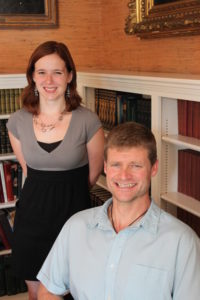
Congratulations to Dr. Steve Powers (faculty member in Biology Department) and Ms. Sarah Ahlbrand (senior in Biology Department ) for the recent acceptance for publication of their study titled “Systematics of the Ashy Darter, Etheostoma cinereum (Teleostei: Percidae) species complex (subgenus Allohistium)” in the international journal Zootaxa. Ms. Ahlbrand: “It was a great experience and really helped me realize that I want to pursue a career in biology lab research.” Sarah’s participation in the Undergraduate Research Assistant Program (URAP) and Summer Scholars at Roanoke College gave her the opportunity to do research with faculty members and allowed for the completion of this project. Due in part to her experience with research at RC, Sarah was able to secure admission and financial support to some of the premier Ph.D. programs in the country and will continue her research this fall as a graduate student.
Dr. Stella Xu and 4 RC Students to do Fieldwork in China this Summer
Congratulations to Dr. Stella Xu (History Department) for winning a Freeman Foundation Fellowship for Summer 2012. Dr. Xu and four Roanoke College students will be doing field work in China this summer. Read the blog post about this award.
Apply to Summer Scholars Program by March 15
Would you rather flip hamburgers (or paint houses or mow lawns) or spend a summer on the Roanoke campus using your mind? Would you like to get paid $2,500 (and free housing and independent study credit) for feeding your curiosity? Roanoke’s Summer Scholar Program is designed for serious students who want to use their summers wisely and work one-on-one with faculty. Every year, students compete to receive one of the coveted slots. Applications are due March 15, 2012. P.S. The application has changed, so see the Summer Scholars page for new details on what is required.
Top 5 Reasons RC students Should do REU Summer Research
REU experience looks great on a grad school application.
You can apply for RC Summer Scholars and REUs to decide whether you’d like to stay at RC or go elsewhere for research this summer.
You experience what “big school” research is like.
You will be paid a stipend to do research.
You will get a realistic preview of graduate school.
Students, if you’re interested in doing research at a different college, you should look into NSF’s REU programs (REU = Research Experiences for Undergraduates). REUs are fantastic preparation for graduate school. The application process varies by school, but you can search for opportunities through the following website:
Find a Faculty Member to Work with on Research or Creative Works
Faculty research interests are posted under the “Faculty Research” section of the website.
Need Money to Present at a Conference? Apply now.
Students are eligible for funding to present their research or creativity at professional conferences. To apply, students should submit a request (including budget numbers) via: https://tiny.cc/travelfund. Funding is capped at $500 per student per year. Students planning to travel before June 30th should apply now for priority consideration.
Faculty Awarded External Grants
During Fall 2011, the following faculty were awarded external grants:
Dr. DorothyBelle Poli was awarded a grant from the American Society of Biochemistry and Molecular Biology for her project, “Bryological Respiration & Photosynthetic Comparisons: A Case to Connect Virginia High School Students to Active Research.”
Dr. Timothy Johann was awarded a renewal of his grant from the Jeffress Memorial Trust for his study, “Characterization of the Active Site of MTHFS.”
Dr. Catherine Sarisky was awarded a renewal of her grant from the Jeffress Memorial Trust for her study, “Purine Biosynthesis in Archaea.”
Dr. Gerry McDermott received a grant from the Gaillot Center for Newman Studies for his project, “Typology in the Thought of John Henry Newman.”
Present at on-campus Conference on Research & Creativity in March
Save the date: Friday, March 30, 2012, 4-7 p.m. in Colket.
Submit an Abstract by the Priority Deadline: March 13.
We will begin reviewing submissions and making decisions on that date, though you can submit through March 20th at 11:59pm.
Any Roanoke College student can present research or creative work at the conference. Projects from class, independent study, URAP, honors, etc. are welcome.
Recent Student Research Presentations Off-Campus
National Conference Presentations
Kayla Klingensmith presented at the Society for Integrative & Comparative Biology Annual Meeting in Charleston, SC in January 2012 on “Rapid Hemocyte Mobilization Following Acute Bacterial Exposure in the American Lobster.” Her research mentor was Dr. Dar Jorgensen in Biology.
Paul Vines presented at the Joint Mathematics Meeting in Boston, MA in January 2012 on “Computational Model of Iron Metabolism in Breast Epithelial Cells.” Paul’s research mentor was Dr. Anil Shende in Computer Science.
State Conference Presentations
Margaret Anderson presented at the Virginia Assessment Group conference in Williamsburg, VA in November 2011 on “Assessing Applied Learning Programs: The Role of Reflection.” Maggie’s research mentors are Dr. Kimberly Filer, Director of Institutional Effectiveness and Assessment and Dr. Julie Lyon of the Business Administration & Economics Department.
Dr. Stella Xu of the history department and four of her students will be taking part in the ASIANetwork-Freeman Foundation Student-Faculty Program for Collaborative Research in Asia this summer for three weeks (May 22 to June 12, 2012). Their project title is “Reinvented Tradition in the Age of Globalization: the Silk Road and its Legacy in Contemporary China.”
The program’s main goal is to support student driven research in Asia under the supervision of a faculty mentor. The organization provides up to $5,000 in research funds for each student and faculty member.
The Freeman Foundation Fellowship is a national competition where only 300 members are chosen to go and make up 14 different research teams in countries all over Asia. This is the first time Roanoke students and faculty are taking part in this and being chosen from numerous other applications is a very prestigious honor. Dr. Xu, Roanoke College’s first East-Asian specialist, attributes being chosen partly to the strong letters of support of the administration, faculty advisors, and the department chair, but mostly to her “strong group of students who show a real interest in East-Asian studies.”
Dr. Xu and her students began planning for this project in March of last year and the final application was submitted in December. Even though each student has a separate research topic Dr. Xu states that she “knows all of the students well and they are already a team”. All four of Dr. Xu’s students have taken classes in East Asian history and two of them are part of the East Asian Concentration program.
The students traveling with Dr. Xu are Kathleen Ouyang (senior) who will be examining “the complexity involved in the recent opening of the National Museum of China”, Mathilda Nassar (freshman) who will focus on “Chinese traditional medicine”, Zachary Hottel (senior) who will examine “European missionaries to China, and their impressions and interactions with Mongol elites in the thirteenth and fourteenth centuries compared to contemporary China”, and Thomas Emerson (Junior) who will be conducting research on “the domestication of Buddhism as well as the revival of Buddhism in contemporary China.” While in China these students will get the opportunity to conduct interviews with scholars as well as visit museums, temples, churches, mosques, and Buddhist grottoes.
Dr. Xu is very proud of her students and is excited about this trip that should be as she says “an effective experience with very productive research. The students will be outside of their comfort zone in China but this will be the best experience of their college life.” The students will present their research reports at three different programs on campus next year but they will also present at the ASIANetwork’s annual conference in March of 2013.
Roanoke College Gender and Women’s Studies Concentration Prize
Purpose: To honor the best student work in Gender and Women’s Studies from 2011
Deadline for entries: Monday, February 20th
Students are invited to submit their work in four categories:
Best Major Research Project (including senior thesis projects, summer scholars, honors projects, honors in the major, or other papers longer than 20 pages)
Best Course paper (under 3,000 words)
Best Creative Work (including creative writing and fine arts)
Best Community Service Project – (projects that specifically attempt to better the lives of women or girls, and/or projects that promote gender equity or understanding across gender lines (male, female, gay, lesbian, bisexual, transgendered). Students should submit a 3 page description of the project along with any pertinent support materials.
Cash prizes will be awarded!
Entries must date from 2011 (Spring, Summer, or Fall) and need not have been created for a Gender and Women’s Studies course.
Winners will present their work at our showcase on March 20th, 11:50-1pm.
Please send 3 copies of your work and a description of the assignment to Dr. Mary Henold, History Dept., 316 Bank Bldg.
Sarah Ahlbrand, a Roanoke College Senior, completed a summer REU at the University of Michigan in 2011
Below is a sampling of NSF-funded summer research programs that target traditionally underrepresented groups (e.g., minorities, economically disadvantaged, women) . These off-campus research opportunities are funded by the National Science Foundation’s (NSF) Research Experiences for Undergraduates (REU).
Hundreds of opportunities exist, primarily in the sciences and social sciences. You can search for all off-campus summer research opportunities here: https://www.nsf.gov/crssprgm/reu/reu_search.cfm
rising Juniors or Seniors who wish to conduct research in the sciences, technology, or engineeringtalented undergraduate students, especially those from minority groups traditionally underrepresented in the sciences: African-American, Hispanic, Native American/Native Alaskan, and Pacific Islander/Native Hawaiian/Polynesian
Apply by February 15, 2012. Program dates: June 4 through August 10
Current freshman and sophomores with an interest in ecology and/or evolutionary biology and who come from underrepresented backgrounds
Apply by January 31, 2012. Program dates: Summer
Minority Research Opportunities in Science and Engineering at the US Naval Research Laboratory (Washington, DC)No official website yet, but here is the contact info for the program
Research Topics/Keywords: Materials science and engineering, biosensors and biofuels, optical materials.
Undergrads with a concentration in physics or related engineering fieldThe program is particularly intended at encouraging participation by members of underrepresented minority groups (African-Americans, Hispanics, and Native Americans) and women.
Program was established to promote access to graduate education among undergraduates who have been educationally or economically disadvantaged, and who may not have had exposure to the academic environment of a research university.Areas: arts and humanities, social sciences, and physical sciences for sophomores, juniors, and seniors (not graduating)Students who have shown potential for success, but may have had limited access to graduate research or other preparatory opportunities; the applicant should indicate his/her potential for success particularly as it relates to educational achievement while overcoming obstacles, which may include, but are not limited to economic, social, or educational challenges.
Hard copy applications must be received by February 1, 2012. Program dates: June 3 through July 28
You must usually be a US Citizen or Permanent Resident to apply–check the fine print.
Top 5 Reasons You Should Apply for Non-RC Summer Research Programs:
REU experience looks great on a grad school application.
You can apply for RC Summer Scholars and REUs to decide whether you’d like to stay at RC or go elsewhere for research this summer.
You experience what “big school” research is like.
You will be paid a stipend to do research.
You will get a realistic preview of graduate school.
Talk to Dr. Lyon (Director of Student/Faculty Research) if you are even remotely interested in applying for one or more of these opportunities ([email protected]; 238 West Hall). If you have a faculty research mentor already, talk to that professor, too. More details from the NSF website are available here: https://www.nsf.gov/crssprgm/reu/index.jsp
REU experience looks great on a grad school application.
You can apply for RC Summer Scholars and REUs to decide whether you’d like to stay at RC or go elsewhere for research this summer.
You experience what “big school” research is like.
You will be paid a stipend to do research.
You will get a realistic preview of graduate school.
Learn more about Summer Research / REUs by attending one of the following sessions:
This Wednesday, 1/25, West Hall 111, 5:45-6:30pm
This Thursday, 1/26, West Hall 117, 12:00-12:45pm
This Thursday, 1/26, West Hall 228, 5:45-6:30pm
Students, if you’re interested in doing research at a different college, you should look into NSF’s REU programs (REU = Research Experiences for Undergraduates). REUs are fantastic preparation for graduate school. The application process varies by school, but you can search for opportunities through the following website: https://www.nsf.gov/crssprgm/reu/reu_search.cfm
Talk to Dr. Lyon (Director of Student/Faculty Research) if you need someone to chat with about these opportunities ([email protected]; 238 West Hall). If you have a faculty research mentor, talk to that professor, too. More details from the NSF website are below.
Other searches available include:
Astronomical Sciences
Atmospheric and Geospace Sciences
Cyberinfrastructure
Department of Defense (DoD)
Earth Sciences
Education and Human Resources
Engineering
Ethics and Values Studies
International Science and Engineering
Materials Research
Mathematical Sciences
Ocean Sciences
Physics
Polar Programs
Social, Behavioral, and Economic Sciences
SYNOPSIS
The Research Experiences for Undergraduates (REU) program supports active research participation by undergraduate students in any of the areas of research funded by the National Science Foundation. REU projects involve students in meaningful ways in ongoing research programs or in research projects specifically designed for the REU program. This solicitation features two mechanisms for support of student research: (1)REU Sites are based on independent proposals to initiate and conduct projects that engage a number of students in research. REU Sites may be based in a single discipline or academic department, or on interdisciplinary or multi-department research opportunities with a coherent intellectual theme. Proposals with an international dimension are welcome. A partnership with the Department of Defense supports REU Sites in DoD-relevant research areas. (2) REU Supplements may be requested for ongoing NSF-funded research projects or may be included as a component of proposals for new or renewal NSF grants or cooperative agreements.
Undergraduate student participants in either Sites or Supplements must be citizens or permanent residents of the United States or its possessions.
Students may not apply to NSF to participate in REU activities. Students apply directly to REU Sites and should consult the directory of active REU Sites on the Web at https://www.nsf.gov/crssprgm/reu/reu_search.cfm
The Virginia Humanities Conference invites proposals for papers and panel sessions that address the theme “Children and Childhood in the Humanities.” (Humanities disciplines include philosophy, religion, art, art history, cultural studies, communication, history, literature, music, and the performing arts.)
Although children have always been an integral part of the humanities, they have often been overlooked in scholarship. Yet it is not hard to find children inhabiting most of the central works—from the Odyssey, the Gospels, the Hindu epics, and the Tao te Ching, to coming-of-age novels and fantasy films.
Our concepts about childhood are central to our understanding of what it means to be human. Philosophers, religious leaders, creative artists—all have constructed arguments about the nature of children and childhood. Children have been regarded as miniature adults, sinful creatures, innocent minds, and creative beings. Childhood is here broadly defined but could include any stage from infancy to second childhood and even the inner child.
We want to encourage interdisciplinary exchange on this topic from a variety of fields. Contributions from the social sciences are welcome if they are focused on aspects of the humanities (e.g., a sociological reading of a novel or work of art).
Please submit a 250-word proposal by email to [email protected] or by mail to Marwood Larson-Harris, Religion Department, Roanoke College, 221 College Lane, Salem, VA 24153. Proposals for panel sessions should identify all participants and include both an overview and a brief abstract of each presentation.
Faculty-directed undergraduate submissions are also welcome.
I’ve created an newsletter (called “RC Research”) to highlight Roanoke College students’ success and to communicate programs to Roanoke College faculty, staff, students, and others. Our December 2011 issue (pdf) has just been published. Previous issues are available here: August 2011 issue (pdf) and September 2011 issue (pdf).
Detailed tables of contents are below. If you have suggestions on content, format, etc., please let me know!
Thanks for reading!
Dr. Julie Lyon, Director of Student/Faculty Research
(my email is my last name at roanoke.edu)
Twenty-two Roanoke College students presented at MARCUS (Mid-Atlantic Regional Conference of Undergraduate Scholarship) on October 8, 2012. After some directional difficulty, both RC vans and several student-driven cars made it just on time for the first presentations of the day. For a $25/student registration fee, presenters received a continental breakfast, a free lunch, and a full day of student and faculty camaraderie.
Roanoke College Student Presenters:
Bryan Piatkowski: Roanoke College
Examining the Evolution of Polar Auxin Transport in Bryophyte Gametophytes
Sam Bsasley: Roanoke College
A Psychological View of Love
Amanda Newman: Roanoke College
Intimacy and Texting Behaviors
Alyssa Bostrom: Roanoke College
Immigration and the Media
Sarah Ahlbrand: Roanoke College
The Biosynthesis of the Chemotherapeutic Agent ET-743 Focusing on the Heterologous Expression of Key Biosynthetic Genes
Julia Boudrye and Lauren Schwabe: Roanoke College
Smartphone Use in College Students: Implications and Impact
Margaret Anderson: Roanoke College
The Executive Office of the President: Analyzing the Influence on Policy-Making
Ariel Firebaugh: Roanoke College
Lymantria disp-erse! The Effect of Landscape Structure on Male Gypsy Moth Densities
RC Student Presenters
Will Bader: Roanoke College
Examining the Effect of Forest Fires and Increased Nutrient Levels on Algal Blooms in Marine
Ecosystems.
Jonathan Perkins: Roanoke College
Ethers and Fluoroethers from Pentafluorophenyl-Substituted Cyclopentadienes
Caroline Hunter: Roanoke College
Gene Cloning in the Purine Biosythetic Pathway in Archaeoglobus fulgidus
Jeremy Johnson: Roanoke College
Bisamine Boron Cations from 1,4-Dimethylpiperazine
Meagan Tolley: Roanoke College
A Study of Purine Biosynthesis in Sulfolobus solfataricus
Colin David Briggs: Roanoke College
Adsorption and Release of Organic Dyes in Mesoporous Silica Spheres
Sara Blankenship: Roanoke College
Creation of a Substrate Phage Display Library to Study Enzyme-Substrate Interactions of Plasmepsins IX
and X in P. falciparum
Paul Vines: Virginia Bioinformatics Institute
A Computational Approach to Iron Metabolism in Breast Epithelial Cells
Casey Wojtera: Roanoke College
Investigations of the Active Site of 5, 10-methenyltetrahydrofolate synthetase (MTHFS) from
Mycoplasma pneumoniae
Kayla R. Muncy: Roanoke College
Cloning Plasmepsins IX and X to Find Their Function in Malaria
Matthew Corbicz: Roanoke College
Examining Polar Auxin Transport in the Moss Gametophyte of Dicranium scoparium
Kacy Dillon & Steven Huffman: Roanoke College
Students’ Perceptions of Professors
Welcome new URAP Scholars! The Undergraduate Research Assistant Program (URAP) would like to welcome our newest batch of freshmen to the program:
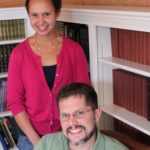
Elsa is seated
Elsa Weiboldt will be working with Dr. Rachel Collins on “Assessing the Role of Exotic Earthworms on Forest Understory Diversity”
Annie is standing
Annie Shreckhise will be working with Dr. Matt Rearick on “Understanding the Choices We Make: A Psychological, Physiological and Kinematic Examination of Human Motion”
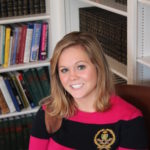
Logan
Logan Brown will be working with Dr. Vern Miller on “Reactions of Amine Iodoboranes with Carbon-Carbon and Carbon-Oxygen Double Bonds”
Ashley
Ashley Nyitray will be working with Dr. Tim Johann on “Investigations of the Enzyme 5,10-Methenyltetrahydrofolate Synthetase”
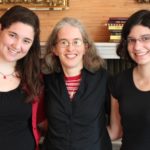
Michelle is on the right
Michelle Pasier will be working with Dr. Cathy Sarisky on “Purine Biosynthesis in Archaea”
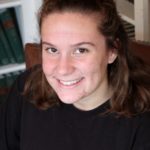
Davalyn
Davalyn Pugh will be working with Dr. DB Poli on “A Rock Garden: Understanding Botany through Natural History”
(not pictured) Nathan Sliwa will be working with Dr. Chad Morris on “Community-Based Public Health Promotion: Diet and Non-Communicable Disease in Palau”
 Roanoke College invites you to the “RC Conference on Student Research & Creativity”, which takes place on Friday, March 30, 2012 at the Roanoke College Colket Center. Students from all disciplines will be sharing their research and creative works on a variety of topics. The conference will be from 4pm-7pm. All are welcome. Free to the public.