Research Highlight: Cody Dillon-Owens

Cody Dillon-Owens is a senior at Roanoke College majoring in Psychology. His research investigates how group biases in empathy can affect our judgements in moral decisions. Essentially, people can make moral decisions based off of emotions or gut reactions rather than logical reasoning. These emotional processes can be influenced by empathy, or putting oneself in someone else’s shoes. Depending on who that ‘someone else’ is, emotional processes may be influenced in different ways. The end goal is to find ways to increase rational thinking in order to combat these biases. His project stems from his fascination on how people interact with one another.

“There are a lot of terrible events in our human history that are the result of discrimination or other negative consequences of group dynamics. I would like to find ways that we can increase our positive experiences with each other.”

He states that working with his research advisor Dr. Buchholz has been a wonderful and enriching experience. He has learned so much about not only research in the field, but how to conduct research of my own.

“There are a lot of valuable skills that I’ve gained from the last couple of years and I hope I can develop my skills as a researcher even more.”

Cody recently had the opportunity to present his research at the Society for Personality and Social Psychology conference.

“The conference was a ton of fun! There were a ton of highly intelligent people all in one building presenting new and exciting research in the field. You definitely learn a lot in a short amount of time, it’s overwhelming. My presentation went well, I actually presented research that someone else in the lab did on making moral decisions in the modern context of self-driving cars. I had the opportunity to present at the morality pre-conference so it was a much more intimate setting.

He is looking forward to the opportunity to present at a conference again.

To anyone considering doing a research project, Cody recommends getting involved.

“Definitely take advantage of the resources Roanoke College provides to be a part of research at such an early time. It will give you the experience and skills to be both competent and competitive in your future endeavors. Plus it’s a lot of fun to actually contribute to a field that interests you!
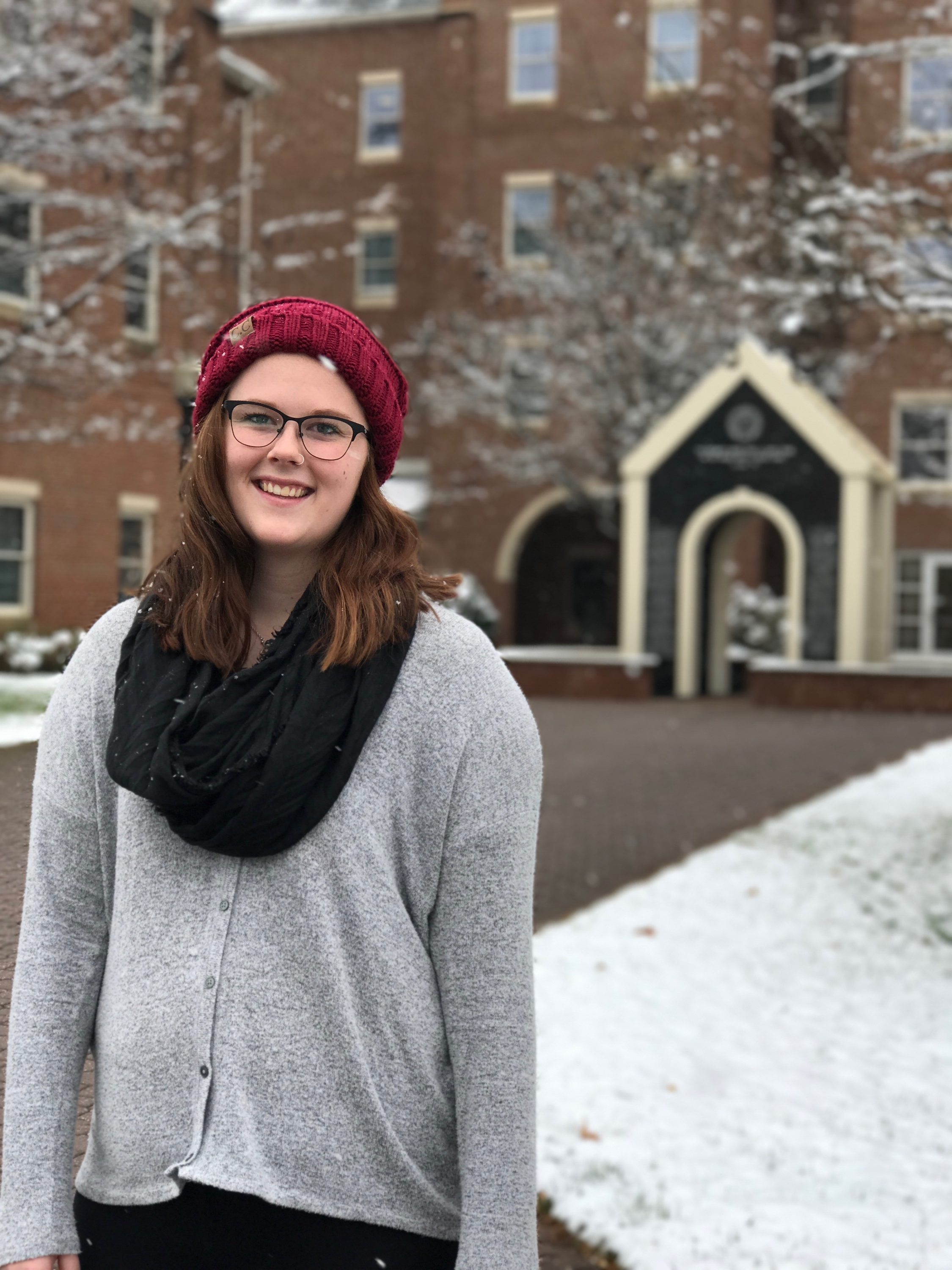
Research Highlight: Megan Blackwell

Megan Blackwell is a senior at Roanoke College. She is a psychology and biology major with a concentration in neuroscience.  She has had the opportunity to work with the Salem Veterans Affairs Medical Center to conduct research.

How did your collaboration with the Salem VAMC come to be?

     “I was at my induction for Psi Chi, the psychology honors society, my sophomore year when Dr. Buchholz approached me. He knew I had been looking for research opportunities and talked to me about the VA and afterwards sent information to me about the primary investigators (PIs) that were looking for undergraduate assistants. There were several projects that I thought were really interesting, so I sent in an application. When I went through the interview process, I had a great interview with Dr. Stacy Belkonen in the Center for Aging and Neurocognitive Services (CANS). She accepted me on as an undergraduate research assistant and I have continued to research there since May 2017.”

How has your experience with VAMC been?

     “I have had an incredible experience at the VA. When I first started, Dr. Belkonen introduced me to everyone who worked in CANS so I could talk to all of them about the research they had going on. From there, I had the freedom to pick which research projects I wanted to be a part of. I was put onto two protocols originally, “Acceptance and Commitment Therapy in Older Adults” and “Traumatic Brain Injury in Rural OEF/OIF/OND Veterans.” With these projects, I’ve been able to do data entry and analysis, study intakes, IRB maintenance, and have presentations at two conferences. I have also been able to assist in performance improvement projects for CANS. I’ve developed wonderful relationships with the researchers at the VA and they have been great mentors for me through the latter half of my undergraduate education and in my application project for PhD programs.”

What has been your favorite or most interesting part of your research so far? Why did you decide to do research?

     “My favorite part of my research has been being able to develop and carry out my own research project. My project is titled “Cognitive Reserve and Resilience in Traumatic Brain Injury” and focuses on the role cognitive reserve and resiliency play on the severity of symptoms experienced by patients who come through our TBI clinic. This project has given me a lot of independence as a researcher. I was able to design the project, carry out my IRB proposal, and do the intakes and data analysis for it largely on my own. The researchers at the VA have been extremely helpful in this process, especially Dr. Belkonen, Dr. Neena Cassell, and Dr. Brian Shenal. This has prepared me for my next steps for research in graduate school. I chose to do research because I am really interested in a variety of topics in psychology. Doing research at the VA now has allowed me to explore these interests and will open a lot of possibilities to me in the future.”

What would you say to current and incoming students interested in doing research?

     “If there are students interested in research, I would strongly encourage them just to ask about it. Professors here are very open about their research if a student is interested in what they are doing. If a student has a topic or an area of interest that isn’t being explored by a lab here, the professors are always open to talk about ways the student can further explore the topic or connect them with someone in the area that could help them.”

Lastly, any other additional information or comments you’d like to include besides the questions stated above?

     “My time at the VA has been extremely influential in my decision to apply to PhD programs for Clinical Psychology. Without working there, I am not sure that I would have decided to go down this path and found something that I love doing as much as this. I’ve also formed relationships with the individuals that work there that I plan on keeping because they have had a profound impact on me both academically and as a person.”