Last summer, senior Joshua Woodley (History major with a concentration in Classics and the Ancient Mediterranean) conducted research under the mentorship of Roanoke College history professor, Dr. Jason Hawke. His project “History, Myth and Memory in Messenia”, explores the question of identity in the Ancient World, specifically focusing on the Greek polis Messenia in second-century CE historian Pausaias’ work Guide to Greece (Periegesis Hellados). Pausanias was a writer concerned with sites, myth, and geography yet his history of Messenia possessed this unique focus. During his research, Joshua became well acquainted with both the classical source of Pausanias, and modern scholarly arguments. As the Messenian story developed, patterns emerged that set the region apart from others; There was a large section of the work dedicated to their proud heroic, and sometimes Homeric, history. In addition to recent scholarship, these patterns led to the conclusion that the Messenian history was the product of years of enslavement by the Spartans. The stories they told, set them in an already firmly grounded historical narrative, and the information Pausanias relayed includes them in cultural developments they had previously been excluded from. Joshua plans to continue studying Messenia throughout his senior year and continue researching Classical Greece in graduate school, emphasizing marginalized communities and their place in history. He would like to thank his mentor, Dr. Hawke, and all the faculty involved in the Summer Scholars program for their help.
Congratulations on all your hard work and good luck at graduate school!
Mikaela Gantz (Political science and environmental studies double major with concentrations in legal studies and peace and justice studies ‘25) participated in the Summer Scholars program last summer with mentor Dr. Todd Peppers, a Roanoke College Public Affairs professor. She applied to the program to conduct research in the familiar Roanoke area and to be a part of a community of student researchers. Mikaela’s project, “The Land Dictum: Environmental Rights Guaranteed by the United States Constitution”, examines a legal article that focuses on environmental rights. Her research centers on Substantive Due Process environmental rights, arguing that those rights include the right to a safe and functioning earth under the right to life and liberty aspects of the due process clause. The Summer Scholars program has allowed Mikaela to gain insight into her field of study: “Legal research is very difficult and time-consuming. It is a lot more reading and thinking than I thought it would be. I am very glad I was able to experience it before law school because it reminded me that this is something I love doing and am capable of doing as well”. Her goals for this project include writing a 50-page paper to submit to a law journal, preparing her for the expectations of writing and research in law school. Mikaela would like to thank her project supervisor and mentor, Dr. Peppers for his constant guidance and encouragement.
Congratulations on all your hard work and good luck in law school!
Senior Kaylee van der Steeg, (History, Political Science, and Art History triple major with a concentration in Screen Studies) conducted research over the summer through Roanoke College’s Summer Scholars program. Her project titled, Children: Humans or Threats?, explores the lives of 732 children as they survive Nazi persecution before being sent to England. Her project focuses on the children who were in the concentration camp systems and their oral histories. While research mainly focuses on the 1940s, the arguments made throughout the piece apply to genocide up until today. Thanks to the Summer Scholars program, Kaylee was able to continue her research on children in 20th-century conflict. During her research, she noticed a gap in Holocaust, and more generally genocide, literature where it pertains to children. In the future, Kaylee aims to bridge the gap between the literature and children’s experiences through future research and publications. Kaylee would like to thank her advisor, Dr. Robert Willingham, Roanoke College History professor, as well as her proofreaders: Ivey Kline ’23, Madison Smith ’24, Camille Carter ’24, and Elizabeth Walton ’24.
Halie Higley (Criminal Justice and Sociology double major ‘25) explored the obstacles Roanoke County Jail inmates face before release with supervisor, Dr. Kristin Richardson, Sociology and Public Health professor. During her time, Halie met with many of these residents, allowing her to better understand their perspectives and needs as both individuals and a general population. With these findings, she will offer a formal proposal that includes suggestions for changes, improvements, and new program ideas that can be implemented in the facility to best suit the population, staff size, and budget of the jail. As a long-term goal, Halie hopes to succeed in enacting these changes in the facility, which would allow the jail to have a more individualized focus for rehabilitation and reentry. Halie applied to the Summer Scholars program to expand her knowledge and research opportunities and this was the perfect program for her research, as it allowed her to remain on campus while completing the data collection for the project in the Roanoke County Jail, which is just a short walk away from campus. The academic opportunity and ease of access to the research site were the final pushes to encourage her to apply for the program. Summer Scholars also helped Halie improve her skills through the informative workshops held weekly. She learned how to more effectively communicate her research goals and progress with others outside of her field of study. From conducting her research, she learned more about the operations of the correctional facility as a whole, as well as how important different perspectives can be when studying rehabilitation and reentry. Furthermore, Halie learned more about the process of conducting research, as there are so many factors that contribute to having a successful experience. While the approval process for human subject research in a vulnerable population is very tedious, it allowed her to critically think about every aspect of the study in a different way. As she nears the completion of her project, Halie would like to thank her project supervisor, Dr. Kristin Richardson of the Sociology and Public Health Department for her endless encouragement and confidence in her abilities as a researcher. She would also like to express her gratitude to Sergeant Brian Flannagan, the Rehabilitation Sergeant in the Roanoke County Jail, as this project would not have been possible without his support. Finally, she would like to thank Dr. Kristi Hoffman and Chief Joseph Mills for being outstanding committee members during each stage of the research.
Lorenzo Camobreco (Biology major ‘26) applied for the Summer Scholar program to further his journey into the world of scientific research. He has been a research fellow at Roanoke since his first year and wants to continue developing and honing his skills as a researcher. His project, “rbfox1 gene expression and its impact on neurological development using zebrafish (Danio rerio)” observes how an increase in the expression of the rbfox1 gene impacts neurological development within zebrafish. With this research, Lorenzo hopes to collect data that detects changes within the shape of the brain, behaviors exhibited by affected zebrafish, and molecular changes within the zebrafish resulting from an increased rbfox1 expression. This will provide insight into how rbfox1 impacts the developing brain, hopefully supporting a hypothesized mechanism behind how rbfox1 works to create the neurological disorders observed in cases where it is expressed outside the normal ranges. During his time in the program, Lorenzo gained several research skills and techniques ranging from genetic engineering to embryonic microinjection. Furthermore, he was able to gain a better understanding of how to formulate his thinking when it came to research and was able to apply this skill to his project. Lorenzo would like to thank Dr. Lassiter for all the support he provided in helping to spark his research interest.
Congratulations to the winners of the Fall 2024 Research Showcase! Your hard work has not gone unnoticed!
First Place: Reed, Abby: Examining storm water infiltration in a meadow restoration site: Where does the rain go? Faculty mentor: Dr. Rachel Collins (middle)
Second Place: Hill, Samson: Transition Metal Free N-Atom Transfer Reactions With Diaziridinium Salts. Faculty mentor: Dr. Daniel Nasrallah (left)
Third Place: Maan, Moazzam: A Structural Analysis of Largest Independent Sets in a Family of Circulant Graphs. Faculty mentor: Dr. Anil Shende (right)
Samson Hill (Chemistry major ‘26) participated in the Summer Scholars program conducting research with Roanoke College chemistry professor, Dr. Daniel Nasrallah and his lab partners, Alexis Hamilton and Ben Cerkovnik. His project, Transition Metal Free N-atom Transfer Reactions with Diaziridinium Salts, aims to support the development of methods to form carbon-nitrogen bonds; these bonds are vital to society as they are used in pharmaceuticals often. Previous knowledge of methods includes forming these bonds using transition metal catalysis. However, these metals tend to be toxic and expensive, so Samson’s project seeks to synthesize non-toxic and inexpensive organic molecules that can facilitate these reactions in place of using transition metals. Samson applied for the Summer Scholars program to gain experience working on chemistry research in a laboratory environment and contribute to scientific knowledge. During his time over the summer, Samson gained valuable skills such as designing and performing experiments with the freedom to make mistakes and learn from them. Upon graduation, Samson plans to apply to a chemistry PhD program. He would like to thank Dr. Nasrallah, Alexis Hamilton, Ben Cerkovnik, the Summer Scholars program, and the Roanoke College chemistry department.
This summer, senior Elizabeth Clay (Theatre major and Religious Studies minor 25’) researched with Fine Arts professor, Dr. Nelson Barre through the Summer Scholars program after dedicating a semester to gaining hands-on experience in Dr. Barre’s class, “Play Direction”. Her project titled, “Diving Into Directing: Halley Feiffer’s” How to Make Friends and Then Kill Them” focuses on directing a play surrounding the lives of three girls who deal with substance abuse and grief. Participating in Summer Scholars has allowed Elizabeth to explore various elements of creating theatre including selecting the play, planning and executing the auditions, marketing, and developing a vital understanding of the socio-political context of the play. Furthermore, she started a Director’s Notebook to become her personalized encyclopedia that contains an analysis of the whole play and each character, scene breakdowns, the context of the play, and more that will help guide her actors, designers, and stage managers through the production process. In completion of this project, her show has been submitted for review with the Kennedy Center American College Theatre Festival (KCACTF), which will send two respondents to review the show and consider it for invitation to the Region IV festival in February 2025. Elizabeth’s show took center stage on December 6th and 7th at Roanoke’s Olin Studio Theatre. After graduation, Elizabeth plans to pursue her passion for directing and theatre with a traveling children’s theatre program before returning to school to become a theatre professor.
This summer Junior, Julianna Morrow (Biology major and Environmental Studies minor ‘26) conducted research in the Summer Scholars program with her mentor, Dr. Rachel Collins. Her project, Effect of Seasons on White-tailed Deer Behavior Between Suburban and Rural Landscapes, investigates the seasonal behavior changes in white-tailed deer between suburban and rural habitats. Julianna aimed to answer two important questions based on the data collected: “How does habitat impact white-tailed deer behavior between suburban and rural wooded habitats across seasons?” and “How does time of day impact the number of detections in suburban and rural wooded habitats?”. While the research is ongoing, Julianna gained various learning experiences such as collecting, analyzing, and explaining data, tracking methodology, and how to utilize Microsoft Excel to its fullest potential. Since starting her project, she has noticed the patterns of suburban white-tailed deer from her research in real life and learned more about wildlife management and the importance of managing overabundant populations like white-tailed deer. Julianna plans to further examine behavioral changes between suburban and rural habitats and present her findings at a conference. She would like to thank Dr. Collins for encouraging her to apply for the program and supporting her along the way, and the Summer Scholars program for giving her the chance to learn more as a research student. She would also like to thank the Honors program for its additional funding and the biology department for the game cameras used in her study.
Congratulations and we look forward to seeing the final project!
This summer, senior Leila Hussein (Political Science major with a concentration in German Studies ‘25) conducted research through the Summer Scholars program with mentor, Dr. Justin Garrison, Roanoke College political science professor. Her project, Why Are People Violent? René Girard, Mimetic Theory, and Film examines film through the lens of René Girard’s mimetic theory to understand things about ourselves and the nature of collective violence. Leila applied for Summer Scholars because it was the perfect opportunity to take her research and turn it into a job, and she enjoyed every aspect of her experience. Although her research has been time-consuming it has also been very fulfilling for her. Leila would like to thank Dr. Garrison for introducing her to Girard’s work, guiding her through the research process, and leaving a lasting impact on her life.
Junior Katherine Hall (History major with concentrations in Archaeological Sciences and Classic Mediterranean History ‘26) conducted research this summer with mentor, Dr. Leslie Anne Warden, through Roanoke’s Summer Scholars program. Her project titled, Renegotiating the Social History of Egypt’s Non-Elite through Ceramic Analysis, examines ancient Egyptian ceramics through a social-historical lens to analyze ceramic typology and determine how different social classes existed. By investigating ceramic material in the form of drawn diagnostic sherds excavated in the summer of 2023, Katherine began to understand how the non-elite lived in Egypt. Her analysis of the sherds presents a larger date range which indicates that the site was active longer than previously believed and that the fractured political structure of Egypt at the time did not destabilize the inhabitants of this site throughout the transition from the Old Kingdom to the Middle Kingdom. Additionally, the sherds provided a glimpse of what a non-elite household consumed for cooking and food storage. Prior research on the site, Kom el-Hisn Egypt, revealed the general date of the entire site but not the date of the individual ceramics or how the sherds, pieces of broken ceramics, functioned in everyday life. During her investigation, Katherine gained numerous research skills that she will continuously use in her academic and professional career such as learning new history and terminology, and how to use research materials effectively to produce results. Katherine is currently preparing for her Honors Distinction Project, however, her research is not finished. The site she is examining will be further excavated and analyzed, hopefully on location in Egypt in summer 2025. The material will be analyzed and cataloged in a distinction project that aims to further renegotiate the social history of the non-elite. Furthermore, she has already started plans for her next research project, Recovering Egyptian Daily Life through Domestic Trash, with the intent to uncover the social history of non-elites of Egypt through discarded sherds. After graduating from Roanoke College, she plans to get her Master’s and PhD to continue her passion in recovering history that has been forgotten.
Congratulations and good luck on your Honors Distinction Project!
Junior Zoe Jones (Communication and Creative Writing double major with a concentration in Publishing & Editing ‘25) conducted research this summer as part of the Summer Scholars program with the help of her mentor, Dr. Teresa Milbrodt, Roanoke College English and Communication Studies professor. Her project titled, Here, Queer, Black, and Functional: Mending Holes in Black Literature, focuses on the expansion of Black authors and specific topics of ethnic conflict in literature to write a novel. A majority of her research involved reading one book per week for nine weeks, then completing an annotated bibliography discussing how helpful the book was for her novel. From this process, she could reflect on the works of other Black authors and how she wished to further craft engaging works that discuss certain topics in Black contemporary literature. Zoe would go on to write her weekly chapters ranging from 5,000 to 11,000 words, and her hard work would ultimately become a novel draft of 100,958 words total. Her novel touches on complex topics including struggles in the corporate world, childbirth, and mental health for Black women, reaching out to people and doing personal research to achieve an authentic portrayal of her characters. Participating in the Summer Scholars program allowed Zoe to grow and learn as an author using her knowledge of publishing whilst combining her passion for writing and communication to simulate the journey of a full-time author. With this research, Zoe plans to revise her novel and send it out into the world of publication.
Congratulations and we cannot wait to read your first novel!
Senior Madison Snyder (Psychology major & sociology minor, December ’24) conducted research over the summer through RC’s Summer Scholars program. Her project titled, Differences in Stress Between Freshmen and Seniors Focusing on Presenting, investigates the differences in stress between college freshmen and seniors while enduring public speaking. Using the Trier Social Stress Test (TSST) model, she has started collecting data from senior participants focusing on a variety of details such as stuttering, eye contact, and the accuracy of the presentation. Applying to Summer Scholars gave Madison great opportunities to further conduct research and allowed for the growth of new and existing skills. During the summer, she gained experience with the Institutional Review Board to approve her study as well as undergoing Social and Behavioral Research CITI training. Additionally, Madison learned how to compose multiple surveys, how to use electrodes, and the Mindware device responsible for collecting heart rate data. Her short-term goals for this research include accurately collecting physiological and self-reporting data; she aims to understand how heart rates differ between baseline, preparation, and presentation segments. Furthermore, she aims to determine whether seniors’ experience with presenting correlates to the amount of stress involved. Her long-term goals are to seek further research and understand stress management options, utilizing the results to consider which options are best for specific groups. Madison would like to thank her advisor, Dr. Kennedy-Metz, Roanoke College psychology professor, for providing guidance throughout the process, and Dr. Carter, Roanoke College psychology professor and Director of Experiential Learning, for hosting the Summer Scholars events, providing research information, and explaining the process.
Congratulations and we look forward to seeing your success in the future!
Senior Austin Parker (Biochemistry & Biology double major with a concentration in Medicinal Chemistry ‘24) conducted research last summer as part of the Summer Scholars program with mentor Dr. Christopher Lassiter. His project, Using CRISPR/Cas9 to model lipoid congenital adrenal hyperplasia (LCAH) in zebrafish (Danio rerio), was inspired by his interest in medicine and health and cutting-edge technology like CRISPR/Cas9. Austin believes improving the quality of life for individuals with chronic diseases is a worthwhile effort, and getting involved in this research provided resources to expand on previous knowledge of LCAH and discover new ways to detect and treat patients.
The majority of his process was a learning experience. He said the beginning stages of the project involved learning how everything worked, technical and lab skills, as well as how to use CRISPR/Cas9. Once Austin learned to navigate the tools, cut sites were designed, and CRISPR was used. When asked what the most challenging part of his research was, he said having to troubleshoot things when they stopped working.
Austin’s research project required him to utilize CRISPR/Cas9, a gene-editing technology requiring the Cas9 protein to do all the heavy lifting. He explains that CRISPR/Cas9 originated in bacteria and was able to be modified by scientists at UC Berkeley to target and make cuts at specific DNA sequences. For his project, he designed a strand of RNA the protein used as a reference. He used the RNA to cut the star gene to prevent the product of the gene from working properly to replicate LCAH in zebrafish. Zebrafish were chosen for this model because of their vast similarities with human genetics; over 70% of the human genome has a zebrafish gene with similar functionality.
Currently, Austin is still hard at work on the model with zebrafish that could potentially carry the mutation. In the completion of his research project, Austin hopes to discover a deeper understanding of LCAH, including detecting early signs of the disease, new ways to treat it, and how it may impact other areas of the body. After graduating from Roanoke, he plans to attend pharmacy school and become a cornerstone in his community.
Senior Virginia Graves (Communications major & foreign policy and history minor ‘24) conducted research last summer with mentor, Dr. Martinez-Carrillo as part of the Summer Scholars program. Virginia knew she wanted to conduct research while at Roanoke and started thinking of topics in freshman year. Her project, “The evolution of hate speech and its consequences”, came about when she started taking communications and mass communications classes and realized the power it can have in manipulating thoughts and ideas. She took a personal interest in interpersonal communication and the dynamics of hate speech. Previous research revealed a connection between hate speech and violence, but she wanted to cover a topic that had not been researched enough.
Virginia says her research process has been going extremely well and her advisor, Dr. Martinez-Carrillo, has helped her along the whole way. This was her first time doing research and she was doubting herself, but found that the support she received along the way was helpful; she was able to prove to herself that she could do it. She said the Summer Scholars program is a great way to be introduced to research as a beginner.
Her research required her to examine hate speech in three different mediums, newspapers in Nazi Germany (1940-1945), radio in Rwanda (1994), and social media in the United States (2023). Her choice of three separate mediums is because she wanted to educate on different types of mass communication and she chose three different countries to show that hate speech is not an issue just in the United States. It has been around for a long time and it is in other cultures; they use different words but the same meaning. When asked what the most difficult part of her research was, she said reading the hate speech was extremely difficult, wondering how people could say such hurtful things about each other.
The first half of her research involved compiling the literature review and initial primary source analysis and the second half focuses on framing the project in the current global context. This entails an analysis of the relationship between hate speech and freedom of speech and how the two interact online. By conducting a thematic analysis, she has found that hate speech has not evolved and the themes carry through all mediums in different countries and time periods. People are still using hate speech to distinguish between in-groups and out-groups like religion. Furthermore, she explained how the connection between freedom of speech and hate speech differs in different countries. As she was doing research on radio hate speech in Rwanda, she found that it was extremely impactful, but the rules changed when the Rwandan Ambassador for the UN came to the United States to use a radio transmitter and was denied use in the United States because it opposed freedom of speech. This sort of interaction brings up the idea of where we draw the line when it comes to freedom of speech.
In the completion of this project, Virginia hopes to answer the question for herself as she has very strong feelings regarding freedom of speech. She wants to go into PR or marketing and says this project was a good writing experience and it taught her how to be resourceful and gain confidence in her work. She is hoping for a publication of her work and that future students will expand on her work.
Roanoke’s biology department had a major win over winter break with the acceptance of a publication in the Zebrafish journal. Congratulations are due to six former RC biology lab students: Kasey Cooper (’24), Bennet Franz (’22), Alexander Kramer (’17), Zoe Krut (’20), Jonathon Morgan (’16), Dr. Benjamin Walker, and RC biology professor, Dr. Christopher Lassiter, who are the main authors of this publication. The article discusses the effects of fipronil on zebrafish craniofacial and heart development.
Of the six former students, five are alumni who studied biology at Roanoke and are utilizing their degrees in multiple ways. Bennet is working on his MD at Louisiana State University, Alexander is an Aquaculture Technologist at Nationwide Children’s Hospital, Zoe is a Research Assistant in the Surgery Department at Cedars-Sinai Medical Center, Jonathon is the Director of Regulatory Project Management and Operations at Akouous, and Dr. Walker is an Internal Medicine doctor at the Lynchburg General Hospital.
The publication can be expected in April 2024. Congratulations again to Dr. Lassiter and our former RC students!!!
Senior Talia Cartafalsa (Environmental studies & chemistry double major) conducted research this summer with Dr. Chelsea Peters as part of the Summer Scholars Program. Her project titled, An on campus collaborative restoration of landfill and degraded suburban ecosystems, started last spring when she was Dr. Peters’ advisee, and wanted to find a way to get involved in research with an environmental focus implementing both her environmental studies and chemistry backgrounds.
Using soil samples, drone surveys, and analyses of previously collected data, she discovered that the landscapes, a landfill site (planning to turn into a native meadow), two drainage ditches, and a wooded lot (planning to tun into a native forest), on Elizabeth campus in the environment center were lacking in plant-supporting nutrients like nitrogen and phosphorus. Since then, seasonal resampling and retesting has been done in correspondence to various restoration acts such as spreading compost, tilling the soil, spraying herbicide etc., allowing the chemical composition of the soil to become more homogeneous. Additionally, conducting drone surveys, in collaboration with Radford University and now an RC alum, allowed her to see the visual impact of change over time; it has also been useful for map making and gathering information such as site slope and watershed outlines.
Furthermore, Talia and other RC students hosted their second literacy event this year and it went really well. The goal of the environment center is to turn it into an outdoor classroom and learning center for younger, underprivileged kids. She said it was a great opportunity to teach the surrounding community rather than conduct research and it was very rewarding.
When asked what the most difficult part of the project was she said things change day to day, season to season especially in environmental science, and plans that are made do not always get done because of this; her original project proposal for wetland construction changed as well as her project title and vision as a result. Talia said going through that process was hard to adjust to mentally, but she is happy with her new project and likes where it is going. With her new project, the process has been a great experience and having background knowledge on the research allowed her to refine the direction she wanted to go in, and she also enjoyed the addition of the professional development events.
With this research, Talia has started writing a paper in hopes of publication. She explained that a majority of this project is unique to Roanoke College and it is hard to explain, but the strength in this is that future research could look at this small liberal arts school and use what was found in their own restoration projects. She is excited to see how the next generations of RC students expand on this project and discover the progress that has been made as an alum. Talia wants to achieve restoration of spaces on Roanoke College’s main campus as well as show that students, faculty, and the Roanoke community can work together to take an unhealthy utilized space and turn it into something useful.
As an environmental studies and chemistry double major, Talia’s career aspirations include applying to PhD programs involving coastal work, and this research has allowed her to build a project from the ground up where she can apply these skills in other places.
If you have any interest in environmental science or being outdoors, be on the lookout for posters in the life science building for service projects hosted by the environmental center open to the public!
On September 22nd, Roanoke College held its annual Family Weekend Research Showcase and we had a great turnout of families, friends, staff and students!
Photo Credits: Hany Hosny
Congratulations to the first-place winner, James Hartmann (’25, Biology major) who presented on groundwater seepage (Methods for Identifying and sampling preferential groundwater seepage sites).
Photo Credits: Hany Hosny (From left to right: Nora Terrill, Dr. Chelsea Peters, Talia Cartafalsa, and James Hartmann)
Talia Cartafalsa (’24, Environmental Studies & Chemistry double major) took home second place with her research about ecosystem restoration titled, An on campus, collaborative restoration of landfill and degraded suburban ecosystems. Third place was awarded to Nora Terrill (’24, Environmental Studies major) with her presentation about cattle grazing and its impact on Catawba Creek (Multimetric Approach to Investigate the Impact of Cattle Grazing on the Health of Catawba Creek, Virginia, USA). All three winners were mentored by environmental studies professor, Dr. Chelsea Peters.
Two RC Alums, Maria Damewood, Health and Exercise Science Major & Spanish Minor ’22 and Savannah-Faith Clark, Health and Exercise Science Major & Neuroscience Concentration ’21, were recently published in the Journal of Aging and Physical Activity alongside former assistant professor, Dr. Ashley Artese. Clark received funding from Roanoke’s Pathways Program allowing her to take her research to the next level. Their article titled, “Physical Activity During the COVID-19 Stay -at-Home Order in Active Older Adults: A Qualitative Study” was published in August of this year and discusses how the closures of fitness centers influenced physical activity.
Earlier this month, Dr. Roland Minton and three Roanoke students competed in an online sports analytics championship! Read further to learn all about it:
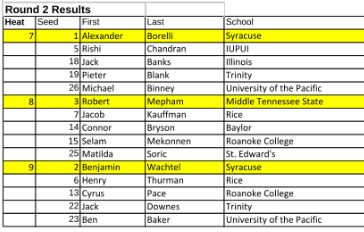
The Roanoke College team of James Rowe, Selam Mekonnen, and Cyrus Pace earned second place at the National Collegiate Sports Analytics Championship in Dallas, Texas, on February 1-2! Syracuse University won the team championship and Jacob Kauffman of Rice University won the individual national championship. The event was organized by Baylor University and hosted by the Dallas Mavericks.
None of the above paragraph is inaccurate, but it could be misleading. If you follow the weather, you may remember that Dallas was shut down February 1-2 by a winter storm. Reluctantly, the RC group canceled our flight and stayed home. With travel to Dallas shut down, the organizers shifted to a remote event. Although the Roanoke team finished second, the competition was entirely individual work analyzing a massive basketball data set. Team standings were compiled by average scores of schools with three or more competitors.
All four of Roanoke’s original team members can claim “Sweet Sixteen” status. In the qualifying round held in November, James Rowe placed 14th and Lilly Blair 16th. Lilly was unable to be in the finals because of commitments with her women’s lacrosse team. In the finals “in Dallas” contestants were seeded into seven groups, with the top two in each group advancing to round two. Selam and Cyrus gave excellent presentations to advance to the second round, while James was a close third in a highly competitive group. These are great results!
Each competitor was given five hours to take a large spreadsheet of play-by-play basketball data, isolate a team or player or type of play, distill the data into a small number of insights, and highlight those insights in a five-minute PowerPoint presentation. Cyrus, for example, pulled all plays involving Jaxson Hayes and identified strengths (e.g., pick and rolls, plays designed for him after time outs) and weaknesses (e.g., shooting from the left side of the court). After giving their presentations, they answered questions from a panel of judges drawn from professional sports teams around the country. The judges rated presentations in a variety of categories such as use of statistics, graphics, clarity of results, and responses to questions.
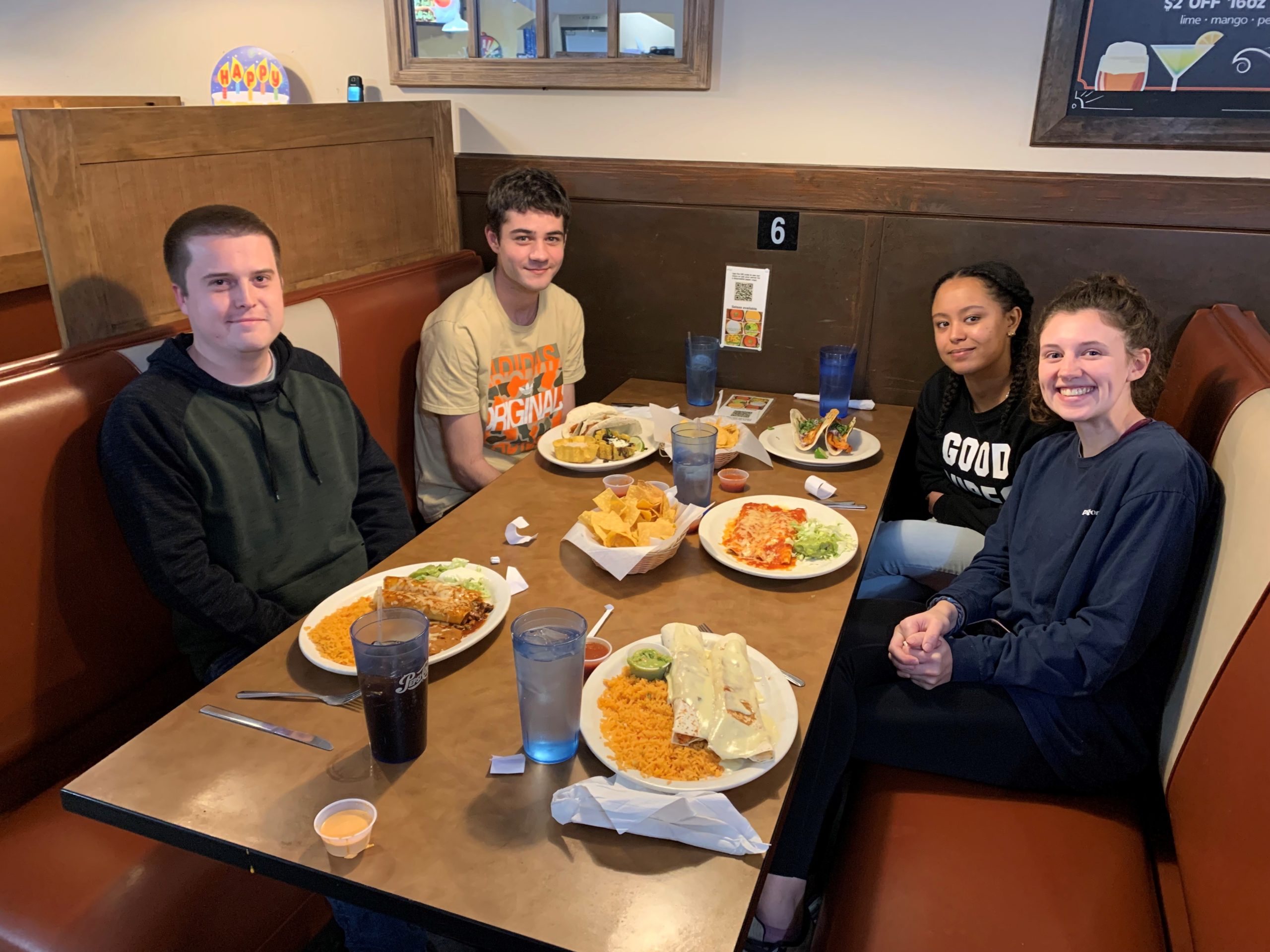
The biggest casualty from the winter storm was the loss of unstructured networking time with the judges, who would have been in recruiting mode. All three RC competitors have an interest in pursuing careers in sports. James and Cyrus have interned with the Roanoke RailYard Dawgs hockey team, and Selam has worked with Stat Crew. Despite being limited to zoom discussions, useful connections were made and the team gained valuable experience in the sports analytics field. However, it’s too bad that our Tex-Mex dinner wasn’t in Texas!
Congratulations to James, Selam, and Cyrus for their outstanding performance and representation of Roanoke College!
Sydney with President Shushock at the Ring Ceremony
During the first week of October, Sydney Wagner attended the Southeastern Institute for Operations Research and the Management Sciences 2022 conference. Working with Dr. Sweet, she presented “Introducing Corporate Psychological Responsibility (CPR).” Sydney has been working with Dr. Sweet since the Spring of 2021 when she began conducting a literature review of multiple different motivational theories, including, but not limited to, Maslow’s Hierarchy and Alderfer’s E.R.G. Theory. After review, they landed on thirteen or so theories to code for common themes to pull out as key factors in human motivation, and the abstract of the paper that came from this was the topic of the presentation at the conference. The current topic is how motivational theory can be applied in the organizational workplace setting.
This was Sydney’s second research conference, and both times she had wonderful experiences. Not only did she learn more about public speaking and presenting her work, but she has also learned a lot more about how to help present feedback to others on their work. She has learned that having multiple perspectives on a project is so important because sometimes there is an easy answer to the question, just through someone else’s expertise and experience.
This past weekend Megan Reynolds traveled to Dallas, Texas to present at the Queer History South Conference. She presented on the topic “The Internal Lavender Menace: Lesbian Feminist Challenges in Southwest Virginia” alongside only one other poster presenter due to complications with the hurricane. Despite this, Megan presented her research and findings to many archivists and public historians from across the south. This research stems from her work this summer as one of the thirteen Summer Scholars, as she looked at the Lesbian Feminist movement in a national view. Lesbian feminism is a strand of feminism that has been a part of the larger women’s movement since the 1970s. This cultural movement emboldened lesbians to concentrate on constructing comradery between women with a focus on rejecting heteronormativity and men. The way lesbian feminists handled race and gender differences, however, ultimately led to the exclusion of bisexual women, transgender women, and queer women of color within movement spaces. This project examined lesbian feminism through the lens of exclusion to show how a movement meant to bring women closer together created a legacy of division within LGBTQ+ communities. Megan discovered that despite how progressive we think we are as a country, we haven’t really moved along as far as we have and bi women, trans women, and queer women of color are still marginalized within lesbian and women-only spaces today.
At this conference, Megan learned that everyone who is there with you at a conference is there for the same reasons and is just as interested in your research as you are. People want to know what your research is about, especially if it is a topic that they relate to and have other connections with.
This past weekend, we had an amazing turnout at the Family Weekend Research Showcase! There were so many wonderful topics that people presented. Congratulations to the first-place winner, Lydia Turner-Little, who presented on the topic of LGBTQ+ Experiences of Religion. For second place, we had a tie between David Adams (Intermittent Fasting Combats Diet-Induced Obesity in Zebrafish) and Alexander Palmer (Neural Dynamics Encode Valence in the Mouse Auditory Cortex).
Kavya Iyer is a recent alum of Roanoke College, having graduated this past spring. This summer, she had the opportunity to work in a research lab as part of the Diversity Summer Internship Program at the John Hopkins Bloomberg School of Public Health. Kavya worked specifically in the Population, Family, and Reproductive Health Department where she studied some of the metrics or tools, used to assess the quality of care amongst patients receiving contraceptive family planning counseling services globally. This department aimed to compile all these resources by undertaking a systematic review to understand whether some of the common themes from these metrics aligned with the standardized quality of care frameworks used in the field.
Kavya’s research was presented at both the Leadership Alliance National Conference in Connecticut in late July and in front of other professionals at the School of Public Health in Baltimore. There, she was able to meet students, faculty, and researchers from all backgrounds that conducted amazing research in the sciences and social sciences from a wide variety of incredible schools across the country. Kavya wishes to ease others’ worries about presenting at conferences, as it is intimidating at first but to remember that everyone else in attendance is there to cheer you on. Remember, you are the expert on your study and that’s what matters!
Q: What did you love about Research at Roanoke College?
A: The rigor of the classes and ample opportunities to conduct research really increased my abilities to navigate the complex field of research as a graduate student. The professors at Roanoke are there to make sure you learn, succeed, and have fun, and I can’t thank them enough for it! I’m looking forward to continuing my passion of advocating and learning about pediatric health and development into my graduate school years.
Ahmed Abusultan attended the 14th Annual Summer Undergraduate Research Symposium during the last week of July. His research revolved around understanding how humans develop the coordination patterns we use when walking, focusing on the relationship between the arms and the legs. For his project, he looked at the utilization of trekking poles to simulate having four limbs to walk rather than two. The main question Ahmed focused on was what the chances are of having the same coordination pattern when walking without trekking poles versus with the trekking poles. The results came out to be that there is a 1/12th chance of having the same coordination pattern after not receiving instruction. This research serves biomechanical engineers in their work to construct more coordinated artificial limbs or robotics with similar functions. Physical therapists can also use this research to assist those who have lost their ability to walk and are relearning how to be mobile again.
James is currently assisting Dr. Ball with her project that focuses on the partners of formerly incarcerated people. There is very little research in this area, so James and Dr. Ball are conducting in-depth interviews with the partners of former prisoners in order to chronicle their experiences. They have completed almost sixty interviews with people across many different classes, cultures, and regions. At this point in his project, James has worked on compiling an annotated bibliography, responding to inquiries, conducting and transcribing interviews, and entering their data into spreadsheets.
The future of this project will consist of more interviews, more transcribing, and James will begin coding the data collected. Eventually, they hope to publish multiple articles about their findings. James hopes to present at a Criminal Justice conference in the future!
Shane Saunders spent the month of June with Dr. Collins, alongside other colleagues, conducting research on the Smooth Coneflower populations at Denhill Preserve. This research is a continuation of a research project Dr. Collins has been working on for almost a decade. Located south of Roanoke College, Denhill Preserve is home to a major population of Smooth Coneflowers. The Smooth Coneflower is an endangered variety of the Coneflower species. The decline of this variety has been due to forest fires and commercial developments threatening their habitats. With this research, Shane and his colleagues aim to seek the core issues that cause the decline of the Smooth Coneflower and promote the preservation of this beautiful and essential species. This preservation process includes counting, marking, and measuring every individual Smooth Coneflower within small plots.
Shane hopes to attend a conference by the end of the year in order to bring awareness to this important species to help it recover in its natural habitats.
This summer, Bobby Hoye has been focusing his research on the science behind solar panels. Working with Dr. Hickox-Young, he is looking at the compound, CsPbBr3, which is one in a new class of materials, called Perovskites. Perovskites, for reference, are semiconductors that transport electrical charges once the light hits them. These materials have only gained popularity within the last twenty years, due to the expansion of research on their increased energy efficiency values, which can be manufactured with relatively low costs for solar panels. Bobby is looking deeper into why CsPbBr3 has its unique properties with the hopes of better understanding its future as the absorption layer in solar panels. He performs calculations of the crystal lattice (arrangement of atoms inside a crystal) and examines structural defects (i.e. missing atoms, extra atoms, etc.) and how these affect the resulting properties with the hope of helping scientists in this field to understand why CsPbBr3 performs so well.
This project is the first part of Bobby’s Honors Distinction Project as well as the first part of his Honors in the Major project for Physics. His next steps are focusing on more calculations and diving into elimination lead (Pb) and replacing it with tin (Sn). This second part of his project will take place during the upcoming Fall and Spring semesters, which will culminate in presenting his work at the American Physical Society (APS) annual conference in Las Vegas during Spring Break.
Selma Sosic, one of our many student summer researchers, says that her favorite part about research here at Roanoke is that research advisors trust their advisees to do field research by themselves. She truly enjoys how much the research advisors value the input and thought processes the student researchers bring to the table. Selma experienced this firsthand when she traveled to Palau with Dr. Chad Morris and one of her partners in the project, Hailey. Selma and Hailey gathered qualitative data via focus groups from several Palauan women over the span of the three weeks they spent there. After each focus group session, they collaborated to pull key themes and ideas from the data they gathered. Selma was then able to write a preliminary report that addressed key motivators, barriers, and key sources of information on breast cancer screening on the island. Her report will be given to the Palauan Ministry of Health and the Non-Communicable Disease Unit to provide them with preliminary ideas regarding screening rates on the island. Once all of the interviews have been transcribed, a final report will be completed and sent to Palau in June of 2023.
This is amazing work and a very interesting project! We can’t wait to learn more!
Ivey Kline is a history major with an interest in American history and archival research. She has worked for the Roanoke College Archives and the Center for Studying Structures of Race for three years and spent the summer of 2021 carrying out extensive archival research. At the Center, she helped create and launch the Genealogy of Slavery Project, a project dedicated to uncovering information about the enslaved people in Roanoke County who built Roanoke College. Additionally, she processed collections for the Maurice Berger Memorial Archive and Library and interned at the Smithsonian Center for Folklife and Cultural Heritage working on the festival curatorial team for the 2022 and 2023 Folklife Festival. She is also president of Historical Society.
This summer, Ivey is working with Dr. Jesse Bucher on the project “The Legacy of Georgianna Saunders: Race, Gender, and Black Midwifery in Southwest Virginia, 1914-1940.” Georgianna Saunders is one of the most important and yet unknown figures in Salem, Virginia history. Born in 1866, Saunders was a member of the first generation of African Americans born to previously enslaved parents after the abolition of slavery. From 1914 to 1940, Georgianna Saunders kept extensive birth records that provide insight into her work as a midwife. During this Summer Scholars project, Ivey has been analyzing the records Saunders kept in her birth records notebooks and evaluating the segregation of medicine, importance of Black lay midwives, and the demographics of the poor, Black and White women Saunders aided. This project will fill an important scholarly deficit regarding Black midwives since most scholarly work regarding birth work focuses on White midwives or male doctors inventing obstetrics.
During the weekend of June 24th, Dr. Lassiter took a couple of students to the International Zebrafish Society Conference in Montreal. Olivia Brichter and Allyson Herriges co-presented at their first international conference on the project, “Estrogen Exposure Results in Inhibited Tail Fin Regeneration in Embryonic Zebrafish (Danio rerio).” Together, they explored the effects of estrogen exposure on tail fin regeneration. Early data shows statistically significant effects, but future research will study the magnitude of effects at a genetic level. They explain their interest in this topic stems from the understanding of elevated levels of estrogen found in our water supply and they wish to explore the impact of estrogen on biodiversity. Olivia and Allyson enjoyed the experiences that the conference provided them. From networking with other developmental biologists and exploring graduate schools to learning about all the potential directions that their research could expand upon, it certainly sounds like an amazing first conference to have attended!
Both Allyson and Olivia have individual research projects that they are currently working on! Allyson is currently studying the effects of Zofran on genes correlated to autism and neural development. She explains that this project is in its preliminary stages of development and hopes to have it completed by spring. Olivia is currently studying the effects of estrogen on Pentylenetetrazol (PTZ) induced seizures in developing zebrafish.
Congratulations, ladies! We can’t wait to hear more about your research!
Megan Reynolds is a rising senior pursuing a double major in History and Music. A member of the Class of 2023, Megan dedicates her time to a variety of campus activities. On top of her regular coursework, Megan plays the bassoon in the Wind Ensemble, is the secretary of the Historical Society, is a member of the Fine Arts Committee, and has been Dr. Rosenthal’s research assistant for the Southwest Virginia LGBTQ+ History Project since Fall 2019. She knew that she wanted to be a history major since the early years of middle school. At Roanoke College, she has focused her attention on the histories of Imperial Russia and U.S. LGBTQ+ and women’s history. In her spare time, she enjoys painting, reading, making bassoon reeds, and spending time with her family, including various pets. After graduating from Roanoke College, Megan plans to attend graduate school in the Boston area to receive a Master’s Degree in Gender and Women’s Studies.
This summer, Megan is continuing her work with Dr. Rosenthal on the project “The Internal Lesbian Menace: Challenges within the Lesbian Feminist Movement, 1970 to the Present.” Lesbian feminism is a strand of feminism that has been a part of the larger women’s movement since the 1970s. This cultural movement emboldened lesbians to concentrate on constructing comradery between women with a focus on rejecting heteronormativity and men. The way lesbian feminists handled race and gender differences, however, ultimately led to the exclusion of bisexual women, transgender women, and women of color within movement spaces. This project will examine lesbian feminism through the lenses of inclusion and exclusion to show how a movement meant to bring women closer together created a legacy of division within LGBTQ+ communities.
Emma Richards had the opportunity to go to Merida, Mexico in May to study at an American-based veterinary clinic called Planned Pethood. In her month there, she went through rotations of what she observed, shadowed, and helped with. The first week she was there, she shadowed the veterinary technicians, doing general care, and helping with small procedures, such as cleaning wounds/changing bandages and giving medication through IV injection. During the second and third weeks, she spent her time observing surgeries and was taught how to do pre- and post-surgical procedures. While there, Emma got to scrub into an orthopedic surgery, helped reform a femur head, and got to perform a spay on a cadaver. Her final week in Mexico was spent in appointment rooms with doctors. She had the opportunity to take pulse and breathing rates, gave intramuscular and subcutaneous injections, removed sutures, and took tons of notes. Some of the other things she got to do included helping run chemical tests and inserting IV catheters into patients.
This is such an amazing opportunity and just shows how far research can take you here at Roanoke!
Last week, Luke Jones attended the Association of Environmental Studies and Science conference. Working with Dr. O’Neill in the Environment Department, Luke presented his project “Planting for climate resilience: Using heat mapping to assess climate vulnerability and the need for future greenspace and urban tree cover in Salem, VA.”
This past weekend, Dr. Lassiter brought three students to Montreal for the International Zebrafish Society Conference. Olivia Brichter and Allyson Herriges presented together “The Effects of Estrogen on Tail Fin Regeneration in Embryonic Zebrafish (Danio rerio).”
Congratulations to everyone and we all look forward to see what you do next!
Maryam Nishtar is a rising senior at Roanoke College, from Islamabad, Pakistan majoring in Psychology and Biochemistry with a concentration in Neuroscience. Maryam is a member of the service organization Alpha Phi Omega and is a resident advisor on campus. She is also a medical scribe at Lewisgale Medical Center and plans to pursue a career as a physician-scientist.
Maryam hopes to use that position to be an advocate for women facing healthcare challenges and dedicate her time to women’s neurological health and overall wellbeing. In her spare time, Maryam likes to explore the Roanoke Valley by going hiking and trying out different places.
Maryam is working with Dr. David Nichols on the project “Physical Changes in the Brain as a function of Clinical Dementia Ratings in Women with Alzheimer’s Disease.” This project will identify differences in the brain structures of men and women with Alzheimer’s Disease (AD), taking into consideration the role of clinical dementia ratings. A literature review will provide context for research about AD in women in relation to clinical dementia ratings in addition to an analysis of longitudinal MR and PET images. The purpose of the study is to identify brain regions affected by AD in the female brain as this may give insight as to why women experience AD more than men.
Haley Keene is a rising junior attending Roanoke College. She is from Abingdon, Virginia. She is majoring in biochemistry with plans off attending a medical school in her future. During her time at Roanoke College, Haley has become proficient in Excel data processing, NMR spectroscopy, and ultraviolet-visible spectroscopy. She has experience in gas chromatography and mass spectroscopy. In her free time, she enjoys hiking, riding her bike, and going out to eat with friends.
Haley is currently working with Dr. Johann on the project “Development of Methodologies to Analyze Antimalarial Drugs from Developing Nations.” As she explains, malaria is a disease caused by a parasite that is typically transmitted through mosquitoes. It can be serious and sometimes fatal to the infected. Coartem is a drug that is used to treat malaria. It has been estimated that thousands of individuals die each year from antimalarial drugs like Coartem that are not up to standard or have been falsified. Many developing countries do not have the resources necessary to test these drugs. This project, with samples sent by Notre Dame from developing countries, would involve analyzing the drug Coartem and making sure it is up to standard. Producing a method to analyze Coartem could potentially save the lives of those suffering from subpar antimalarial medication.
A recent honor places Roanoke College’s physics program in the top 10 percent nationally and internationally.
The Roanoke College chapter of the Society of Physics Students (SPS) has won an Outstanding Chapter Award from the SPS National Office. That designation is given to fewer than 10 percent of all SPS chapters at colleges and universities in the United States and worldwide.
The honor recognizes chapters for their excellence as top-tier, student-led physical sciences organizations. SPS chapters are evaluated on their level of interaction with the campus community, the professional physics community, the public, and with SPS national programs. The Outstanding Chapter Award recognizes high levels of outreach as well as unique approaches to fulfilling the mission of SPS to “help students transform themselves into contributing members of the professional community.”
Next up, we have Davis Tingle. Davis is a rising senior expecting to graduate with math and computer science degrees. As a summer scholar, he is working on optimizing drone delivery in rural and city landscapes. Outside of academics, Davis is a lead guide with Outdoor Adventures and is one of two R-house volunteer coordinators.
This summer, Davis is working with Dr. Shende on the project “Drone Delivery Optimization in Mixed Fields.” He explains: My project’s focus is researching optimization methods for autonomous drone delivery. In recent years drones have become viable options for delivery agents as they are fast and environmentally friendly. Therefore, anyone who orders packages from the internet will benefit from this research. I plan to optimize a scenario in which a train drops off pods containing both goods and a drone to service the area. My goal is to find ways to minimize parameters like 1) total flight time and distance, 2) number of drones and pods used, and 3) the total time and distance for the train.
Happy Friday! We have two Summer Scholars to introduce today!
First up, we have Lillian Pingle. Lillian is a junior from Waynesboro, Virginia, who is majoring in Sociology and minoring in Religious Studies. She is in the Honors Program, on HrnsPAG, and the president of RC Lutherans. She also has two jobs, one as a tutor at the Roanoke College Writing Center and the other as a Wellness Peer Educator with Student Health and Counseling. She plans to graduate from Roanoke College in December of 2022 and go on to get her Master’s in Religion starting in the Fall of 2023.
Lillian is working with Dr. Trexler on the project “The Evangelical Lutheran Church in America: The Whitest Christian Denomination in the United States.” Here is her description of her work: This project examines why the Evangelical Lutheran Church in America (ELCA) has the highest percentage of white people of any other Christian denomination in the United States (Lipka 2015). I conducted in-depth, semi-structured interviews with pastors in the Virginia Synod to discuss why they believe that the ELCA is the whitest Christian denomination in the United States, and how they think racial diversity and justice might occur in the denomination. After these interviews, I will survey the laity in those pastors’ congregations to assess lay conceptions of racial justice in the ELCA.
As we begin to start a summer of research, it is time to introduce our Summer Scholars!
Jennie Costa is a double major in Art History and History. This summer, she is working with Dr. Leslie Warden on the project “Visiting an Ancient Egyptian Oasis: What Ceramic Artifacts from ‘Split Rock’ Can Reveal About Ancient Travelers and the Paths they Chose.” As she explains, many popular accounts of Ancient Egypt focus on the artifacts of the elite, which although interesting, exclude a massive portion of the population. This research, conducted using everyday ceramic artifacts from the North Kharga Oasis Survey, aims to provide insight into the use patterns of the oasis, a sanctuary for travelers. For the Egyptians, the desert was an unforgiving and brutal region, far outside the known and welcoming world of the Nile Valley. The oasis was a crucial stopping point before travelers faced the dangerous conditions of the deshret, and the ‘things’ people left behind at Kharga Oasis provide insight into the function of the site.
Keep an eye out for more introductions of our Summer Scholars!
Senior Jacob Barret conducted research this past summer and fall using the zebrafish model to characterize the effect of estrogen on regeneration in the caudal fin. His work demonstrated that embryonic zebrafish exposed to high concentrations of estrogen resulted in inhibited regenerated tail length, area, and morphology. Furthermore, differences in pigment formation were qualitatively observed between treatment groups. This spring, he has focused on elucidating possible molecular mechanisms responsible for this inhibited regeneration process. So far, he has observed the expression of two genes involved in regeneration in the presence of various estrogen concentrations following amputation. The expression of these genes in various estrogen treatments has been monitored using qPCR. The results of this molecular work will be discussed as a part of his senior thesis near the end of April! Fantastic work!
Senior Rebecca Shannon is conducting research to investigate stigma in relation to people living with HIV/AIDS (PLWHA). She is interested in looking at how age, sexuality, knowledge of HIV/AIDS, and diagnosis mediate HIV/AIDS stigma for both PLWHA and those who do not have HIV/AIDS (non-PLWHA). Increasing knowledge is the traditional approach to decreasing stigma and she is trying to ascertain what other variables are at play in stigmatic attitudes. For her research, she surveyed PLWHA and non-PLWHA nationwide as well as some Roanoke College students. After analyzing the data, she presented her findings at the National Conference on Undergraduate Research (NCUR). Wonderful work!
Senior Caylyn McNaul’s research has involved using High Performance Liquid Chromatography (HPLC) to discern the identity of potentially falsified pharmaceuticals from lower to middle income countries. Throughout her research, she has analyzed samples and was able to calculate some statistics based off the results that she has obtained. These results have shown that nearly 25% of all the antibiotics tested were substandard. Recently, Caylyn presented at the American Chemical Society Symposium. From her experience presenting, she has gained the ability to be more comfortable presenting her research as well as gaining experience speaking to those in the industry. Great work!
Repost: Sophomore Katherine Vaughan works at the Dilly Dally café in Salem and demonstrates her business background through her involvement in their Reading Rewards initiative. Katherine says, “The Reading Rewards promotion is a part of our effort to ‘spread some sunshine’ [Dilly Dally’s tagline]”. Here’s how Reading Rewards, which is open to preschoolers through fifth graders, works: Students can pick up a bookmark at the Dilly Dally. Once they’ve read five books, they write on the bookmark the titles of those five books. They can then bring the bookmark back to the Dilly Dally and receive a free kiddie scoop of ice cream. Through creating colorful bookmarks for kids, Katherine hopes, “that the project inspires kids of all ages to form a lifelong love of reading.”
Senior Selma Sosic has been working alongside Dr. Chad Morris to research the perceptions of mammography screenings from women in Palau. This past fall, Selma and her fellow research team analyzed survey data received from Belau National Hospital and created the data into a preliminary report which allowed the research team to establish significant barriers that women face when trying to receive mammograms. This summer, Selma plans to go to Palau with Dr. Morris to help conduct focus groups with Palauan women, as well as interviews with the medical staff and key stakeholders on the island. Using a Community-Based Prevention marketing framework, Selma will be using the data the team collects to create a preliminary report to be shared with the Palauan Ministry of Health and Human Services and other stakeholders. Great work!
Repost: Back when she was a freshman, Charissa Roberson ‘22 wanted to write a bilingual play. The French and creative writing double-major was researching World War II to find storylines to inspire her when she found two photographs that grabbed her attention. Three years of research later, Roberson has created an immersive, bilingual experience that she will present at 7 p.m. Saturday in the Wortmann Ballroom at the Colket Center. The presentation, “The Crossroads of Saint-Lô”, examines the lives of two men — Major Thomas Howie, U.S. Army Infantry Officer, and French resistance fighter Raymond Robin — who died in that area during the war. Wonderful work, Charissa! Find more about Charissa’s work here: https://www.roanoke.edu/about/news/charissa_roberson_french_crossroads_of_saint-lo_presentation?fbclid=IwAR0UiMExKVt–AONvSDb1GvJq9rXDB3IcXLQIPSvBaFNv1ajvVDnQ-hpc6k
Roanoke’s Public Health Studies is an interdisciplinary approach to the health care arena, offering students diverse perspectives on health through courses in both life and social sciences. Public Health Studies also helps students find a niche in the health field that matches their own personal passions, and gives an advantage over those who’ve pursued a purely technical approach to health education. Through rigorous investigation and analysis, Public Health Studies provides individuals with a strong foundation for a range of careers in the health field, such as administration, advocacy, counseling, medical practice, public policy, research & analysis, social work and occupational & physical therapy.
Repost! Environmental Studies senior, Vashawn Gray learned much about the complexities of running a museum from his internship at the Virginia Museum of Natural History in Martinsville. He converted an existing pollinator garden into an exhibit display, adding educational information about the plants in the pollinator garden and the types of native pollinators in the local area and created a mascot graphic for the pollinator exhibit to help make the information more colorful and attractive to children. Wonderful work!
Bella, a Senior at Roanoke College, is conducting an independent study and honors in the Art History major with a continuation of her summer work. Bella’s semester work will result in a paper that allows her to elaborate upon her research and compile her findings into an academic paper to submit for publication in a peer-reviewed journal in the field of Ancient Near Eastern Archaeology. From this project, Bella presented her independent research at the Showcase of Experiential Learning this past September and placed second overall. She gained experience presenting with confidence and authority and it helped her think about her project big picture while explaining complex concepts to people with no previous experience learning about archaeology. Great work!
This past week, two current students (Hannah Petty and Jacob Barret), four former students (Erin Kosmowski, Dandre Amos, Sean Ryan, Lucas Jones), and Dr. Lassiter had their manuscript accepted for publication in Environmental Toxicology and Pharmacology. Follow the link in the profile to find the publication. Congratulations!
This semester Ethan is researching gender conformity and how it may predict poor adjustment in young adults. Also, he is researching whether relational aggression (i.e., gossiping, spreading rumors) plays a role in this relationship. Dr. Findley-Van Nostrand and Ethan are working on drafting an abstract to submit to the Reid Conference at UVA for undergraduate psychology students. Wonderful work!
During her time at Roanoke College, Tess has conducted research in several departments on campus and presented her research at multiple conferences. This semester, Tess worked on a project for the Theatre department. She was the dramaturg Roanoke College’s production of The Children’s Hour (Feb 24-26 2022). The play is about two schoolteachers, Karen Wright and Martha Dobie, who run a boarding school for girls in the 1930s. They get accused of having an affair by one of their students and the play follows their downfall and life after the accusation. Tess performed all the historical significance research behind the play from the nuances in the script to women’s education to life in 1930s Connecticut. She took an artistic approach to display her research in designing a costume to convey the biography of the playwright, and a 6’ wardrobe that contains Joseph Cornell boxes relating to all the areas of research she performed. Tess says the most rewarding part of the process was articulating why a 1930s piece still resonates with audiences today. Tess won the Literary Managers and Dramaturgs of the Americas (LMDA) Kennedy Center fellowship for the region for her lobby displays and will be competing in Nationals in April. Fantastic work!
This week we are excited to highlight Sarah Jane! For her Honors Distinction Project, she planned and facilitated a theatrical workshop aimed at middle school students with a focus on differentiation techniques for a variety of differently-abled students. She created a basic lesson plan that focused on several specific Virginia Standards of Learning for 6th-grade theatre students – many of these standards revolve around promoting positive self-image and confidence, skills that are vital to any young person’s life and education. Theatrical pedagogy is especially effective at instilling these values and she believes that this workshop not only fulfilled a learning requirement but also enriched the lives of these students. She differentiated this lesson to accommodate a variety of different students using vetted educational and theatrical research to determine the best technique to do so. This work also proves the validity and necessity of theatre education in schools and the fundamentality of arts programs for student success. She will be presenting her research at the Southeastern Theatre Conference in Memphis, TN on March 12th. Great work!
(Repost) Taylor Kracht ’18 has been published as an author from research that she did during her senior year at Roanoke College! “Media Consumption: Association with Implicit Theories of Romantic Relationships” was published by the Psi Chi Journal in their December 2021 issue. Taylor worked under Dr. Darcey Powell in the psychology department during her research project. The project focuses on how the consumption of media can affect individuals’ beliefs about romantic relationships. This project also granted Taylor Honors in the Major after presenting it to a board of faculty.
This past weekend, Dr. Ackley and student researchers attended the SEACSM conference in Greenville, South Carolina. Maria Damewood placed 2nd out of 55 undergraduate poster presenters and Bryn Haden gave a phenomenal oral presentation. The research team also had the opportunity to represent Roanoke College while participating in the SEACSM Trivia Bowl. Fantastic work!
Within the Environmental Studies Program at Roanoke College, students gain insight into their relationship with nature, understand their role in creating an equitably sustainable world, and investigate pressing global, national, regional, and local environmental problems. In addition to the core curriculum and choice of tracks within the major, students are provided ample off-campus opportunities through research and internships to further their education.
Dr. Rosenthal, associate professor of history at Roanoke College, released her book titled, “Living Queer History: Remembrance and Belonging in a Southern City” which has now sparked conversation both locally and nationally. Published in December by the University of North Carolina Press, Dr. Rosenthal’s book tells the story of the LGBTQ+ community in Roanoke in addition to detailing her own journey, coming out, and transitioning as a transgender woman while working on the book.
The Fine Arts Department at Roanoke College encompasses four majors – art, art history, music, and theater. Located in Olin Hall, the Fine Arts department helps students develop and shape their passions for the arts, no matter the art form. Whether it be in a studio classroom, on stage, or during international travel, students are supported by their faculty members and peers amongst the Fine Arts department to reach their fullest potential.
In December 2021, Dixie Weaver ’23 received the Benjamin A. Gilman International Scholarship to study in France. The Benjamin A. Gilman International Scholarship Program is sponsored by the U.S. Department of State’s Bureau of Educational and Cultural Affairs and offers funding for students to intern and study abroad, providing cultural immersion and the opportunity for both academic and career development. Dixie, a French major and member of both Maroon Baptist and French Club, will travel to Université Catholique de Lyon in Lyon, France during the fall 2022 semester. Congratulations Dixie!
Clare Kinney is working alongside Dr. Ackley in the HHP Department to study lower back pain in collegiate pole vaulters. Her research proposal was created as a part of her Research Methods class, a HEXS major requirement, after writing a literature review on spondylolysis in collegiate pole vaulters. After completing the class, Clare decided to use the base proposal she had developed to look towards conducting data collection. Currently, she is planning to research the different factors of pole vault mechanics and joint range of motion that may impact the occurrence of lower back pain. Fantastic work!
Zachary King conducts research with Dr. Steinweg which involves collecting ticks from various locations across southwest Virginia, calculating the density of the different tick species at the locations, and eventually extracting DNA to find diseases from the collected ticks. So far, they have documented the density of the various tick species from our 2021 collection. As a result of his work with Dr. Steinweg, Zach has presented his research at the Research Showcase at Roanoke College in addition to being selected as a runner up for the Virginia Mosquito Control Association (VMCA) student poster competition. Great work!
Bryn Haden is currently conducting research with Dr. Ackley in which they are investigating temporal change in children’s perception of their environment from 2017-2021 to determine if there is a correlation to their BMI status throughout the years. Since the Fall semester, Bryn has been accepted to present her research findings at the SEACSM Conference this February! Throughout her experience with research at Roanoke College, Bryn loves that, “there are a variety of topics that you can research in many different departments all while still in your undergraduate studies. This is a rare and very special opportunity for all of us. Also given Roanoke’s smaller size, we students are able to take charge in our research and gain meaningful skills that will aid us in our future endeavors.” Keep up the great work!
Caylyn’s research involves the testing of pharmaceuticals from middle to lower income countries using high performance liquid chromatography. So far, she has performed system suitability for two active pharmaceutical agents (acetaminophen and amoxicillin) and is in the process of working on a third, amoxicillin clavulanic acid. Caylyn is planning to present at the American Chemical Society Conference in March. She also is working to build another HPLC for the Chemistry Department and helping with a pioneer project for sample tracking. Throughout her research experience, Caylyn has had the opportunity to present her research during Family Weekend at the Student Research Showcase in which she was able to gain confidence in her presenting skills! Fantastic work Caylyn!
Dr. Todd Peppers, Henry H. & Trudye H. Fowler Professor in Public Affairs, spent his extra time during the COVID-19 lockdown researching topics that were later created into an article for the October 13, 2021 issue of the Journal of Supreme Court History, titled “‘Destructive to Judicial Dignity’: The Poetry of Melville Weston Fuller.” This article features a collaboration with Mary Crockett Hill ’91, assistant professor of English and communication studies and director of the “Roanoke Review.” Hill and Peppers’ article explores the career and life of Supreme Court Justice Melville Weston Fuller, who was appointed by President Grover Cleveland. Setting this article apart, Hill and Peppers wrote about Fuller’s penchant for writing poetry, an important aspect of his legacy that is often overlooked. From this collaboration, Hill notes, “At a place like Roanoke, there is this sense of community and a focus on liberal arts that derives faculty and students to know things far beyond their field or ways of thinking.” Peppers adds, “A benefit of teaching at a small, liberal arts college is that it fosters and encourages opportunities for interdisciplinary partnerships.”
On December 14, seven Roanoke College student researchers presented their findings on various topics as a part of the ECON Lab @ RC Fall Mini-Conference. ECON Lab, a stellar program at Roanoke College, allows students to conduct real-world research under the guidance of Dr. Alice Kassens, John S. Shannon Professor of Economics at Roanoke. Wonderful work!
Maria Damewood is a Senior Health and Exercise Science major with a Spanish minor. Last year, she conducted research in the HHP Department that focused on the effects of the COVID-19 statewide closure of fitness facilities on older adults and their physical activity levels. Last week, Maria was accepted to present her findings at the Southeast Chapter of the American College of Sports Medicine meeting in February of 2022! Fantastic work Maria!
For this week’s Student Spotlight we are thrilled to highlight Senior Lexie Duttera. Lexie is working with doping lanthanides into Silver Gallium Sulfide nanocrystals with Dr. Hughes in the Chemistry Department. When asked what she loves most about research at Roanoke College, Lexie says she loves helping create new experiments to conduct and she loves learning new things that no one else has done before. Great work Lexie!
This week we are excited to showcase Olivia Brichter’s work with Dr. Lassiter in the Biology Department. Currently, Olivia and Dr. Lassiter are researching the effects of estrogen and seizure behavior in developing zebrafish. Olivia has loved working with Dr. Lassiter to explore her academic and research interests, especially since faculty are just as much a part of the learning process as students are! Wonderful Work Olivia!
Senior Hunter Adams is a Health & Exercise Science major with a Public Health minor. Currently, Hunter is working with Dr. Liz Ackley in the Health and Human Performance Department to learn the steps to develop and implement a new center within an existing academic organization. Additionally, Hunter is learning how to design all the protocols that will be used within the new Human Performance Lab. Great work Hunter!
Sophomore Kallie Parish is working alongside Dr. Kristen Rapp in the Department of Sociology and Public Health. Currently, they are in the beginning stages of gathering information on the intersectionality of Disability, Policy, Gender and Health. Kallie loves that Research at Roanoke College, “is what you choose to make it! It can be about advocating for something you have for years, or something brand new.” Nice job Kallie!
Senior Amanda Kern is working with Dr. Richard B. Keithley in the Chemistry Department. Amanda has been working on the development of a UV-VIS spectroscopy experiment for future CHEM 350 instrumental analysis where students utilize a double beam in time UV-VIS spectrometer to extract kinetic data from a chemical system of real-world relevance. The molecular reaction being studied is the degradation of food dye with sodium hypochlorite producing a colorless product. Great work Amanda!
This week we are excited to highlight Senior Tess Weidenkopf! Tess is currently finishing a project for Departmental Honors in the Biochemistry Major and is developing a methodology to analyze suspect Metformin HCl pharmaceuticals from Sub-Saharan Africa via HPLC. She also is working on a new project for Departmental Honors in the Theatre Major. The project is a dramaturgical study of Lillian Hellman’s The Children’s Hour focusing on the psychological development and mental health issues of young women in single sex education as well as the historical context of the production. Since starting her Research Fellowship, Tess has attended a conference at Harvard University where she presented her research on the development of nanocrystals that she completed with Dr. Hughes. She also won the Irene Adler Meritorious Award in Dramaturgy for her work on Silent Sky. Fantastic work Tess!
This week we are showcasing Senior Emily Curfman’s research. Since her freshman year, Emily has conducted research with Dr. Sweet in the Business Department and have looked into a variety of topics over the last few years. Currently, she is researching the relationship between job satisfaction, motivation, and productivity in telework. This research is useful for employers to know because of the recent increase of teleworking in the workplace. She also has a passion to learn more about the field of human resource management, so this research allows me to gain more knowledge about my future career path. This past week, Emily presented her research at the SEINFORMS conference. Way to go Emily!
Dr. Liz Ackley, the Brian H. Thornhill Associate Professor of Health & Human Performance at Roanoke College, and the director of the Center for Community Health Innovation at Roanoke College announced last week that the Northwest Food Access Initiative has received a $10 million dollar earmark from ARPA funds. The Center serves as an avenue for both students to experience real-world learning and a chance for the Northwest neighborhood of Roanoke to improve and flourish because of students’ research. With Dr. Ackley’s efforts and a city panel of volunteers, the creation of this shopping center in Northwest Roanoke is possible. When asked about this project, Dr. Ackley says, “I think the uniqueness of all of this work is that we have a small liberal arts college guiding what could potentially be one of the most transformative project ever in the history of Roanoke.” Soon, Roanoke City will find a developer to begin the first stages of this significant project. We look forward to watching this shopping center come to fruition!
This week we are excited to highlight Senior Audrey Mason who is working with Dr. Kelly Anderson in the Chemistry Department. When asked to describe her research, Audrey says, “The energy crisis of the mid 1970’s sparked the push for renewable energy. This was the first time there was a threat of running out of fossil fuels which led to the development of renewable energy sources and energy conservation. Thermal energy storage is when energy is stored in the form of heat and held until it is released to be used. This is beneficial when moving towards a greener future because it allows for energy to be stored for an increased duration of time. Although working on a nanoscale, simulations can lay the foundational blueprints for larger projects. The goal of this experiment is to discover the influence of a closed pore on the melting properties of a phase change material, lead. In particular, it was examined if the melting point changed as the volume of the pore increased at two different loading densities.” Keep up the great work!
This week we are introducing Research Fellow Friday. For this first Friday, we are excited to highlight Sophomore Ethan Parker who is working with Dr. Danielle Findley–Van Nostrand in the Psychology Department. This semester, Ethan is working on a literature review that focuses on synthesizing information from precarious manhood theory and how threatened masculinity affects aggression. His work this semester will serve as a proposal to segue into an empirical study next semester. Fantastic work Ethan!
This week we are excited to highlight Senior Kayla Marshall. Kayla has been conducting a Bilateral Comparison Study on a human cadaver with Dr. Thibodeaux in the Biology Department. Throughout her experience with Research at Roanoke College, Kayla loves that she can conduct research independently with the strong support from her advisor. She can control and conduct her research independently under the guidance of Dr. Thibodeaux. Great work Kayla!
I had the opportunity to interview Shannon Baker concerning her opportunity to have her distinction project on Confederate monuments be published in the Michigan Journal of History.
Can you describe what your research project is about?
My distinction project, Confederate Monuments in Context: Arlington National Cemetery and the Legacy of the Confederacy, analyzed the Confederate monument at Arlington National Cemetery and placed it in the larger, modern-day context surrounding the debate around Confederate symbols. I applied theory from memory studies and public history to explain the power of hegemonic narratives of history, why monuments can be so controversial, and the arc of the Lost Cause throughout American history.
What made you decide to pursue your topic? Why did you decide to do research
I decided to research this project both out of a genuine interest (we had been discussing Confederate memorialization in my Intro to Public History class when I proposed this project), and because I was going to participate in the Washington semester, and I wanted to be able to do research while I was in D.C. I knew I was going to do research because of my enrollment in the Honors program.
How has your experience with your research advisor been?
I really loved getting to work with Dr. Rosenthal. She was so helpful and encouraging, and I definitely couldn’t have gotten it done at all without her. Dr. Rosenthal kept me on track, and my paper wouldn’t have been as strong as it was if I didn’t have such a great supervisor.
What has been your favorite or most interesting part of your research project so far?
What would you say to current and incoming students interested in doing research?
I recommend doing research to any student at RC. It gives you the opportunity to make something you can be so proud of, and it certainly made me a better writer and researcher. It’s not as scary as it seems!
I had the opportunity to interview Abigail Packard concerning her time as a research fellow at Roanoke College.
Can you describe what your research project is about?
My independent project looks at Perceptions of Assessment: Comparing College Students & Faculty. We asked a series of questions about assessment type, including formative, summative, and standardized assessments, what they thought about them, and general questions pertaining to assessment. We also asked about assessment method types such as projects, written exams, oral exams, take-home tests, etc. Through the project, I was able to gain insight into how students and teachers may or may not believe that assessment is an accurate measure of students’ knowledge and if students and faculty differ in their preferences for different methods of assessment.
What made you decide to pursue your topic?
What made me decide to pursue this research is my love for education and insight into assessing students best. I am majoring in elementary education and hope to bring knowledge of assessment preference into my future classroom. I also feel it is essential for others within education to see the possible stressors or benefits of assessment.
Why did you decide to do research?
I am part of the Research Fellows Program for the class of 2021, and what first caught my eye is the many benefits of research after college when looking into graduate programs and being a competitive applicant. I also enjoyed the idea of research pushing you to be a committed individual in your academics and the continued growth it provides me as a student.
How has your experience with your research advisor been?
My research advisor is Dr. Powell, who works in the psychology department. She has been such a wonderful mentor by pushing me to think in new ways, providing support, and continuing to help me grow as not only a student but also as an individual. It is apparent she cares for all students in her lab and wants to see them all succeed and work together, and it has been an incredible experience working with her.
What has been your favorite or most interesting part of your research project so far?
My research project’s most memorable experience has been sharing my research with interviewers as I have been applying to teaching positions. It has allowed me to see my research come to life on campus and in my future career and lets me share it with others.
What would you say to current and incoming students interested in doing research?
If there are incoming students or even current students interested in research, I encourage them to learn more about it and see if they feel they would enjoy it. It is important to ensure you are aware of the time commitment but also recognize the endless benefits that can come from completing research throughout college. It is not very common for college students to conduct research starting from first-year students to senior year. Take a chance and push yourself. You may find you love research!
Lastly, any other additional information or comments you’d like to include besides the questions stated above?
I want to thank the Research Fellowship for the opportunity I was given and to thank Dr. Lassiter for supporting me throughout my four years at the college. Lastly, to my peers in the lab and Dr. Powell for always being my advocate and pushing me to be the best I can be as a student researcher.
I had the opportunity to speak to David Casson concerning his research on structural stigma and substance abuse disorder with the aid of Dr. Schorpp.
Can you describe what your research project is about?
My research project is about the effect of stigmatization, specifically in terms of a quantitative sociological analysis of structural stigma and substance use disorder. This research project analyzes various sources of structural stigma such as medical policies, treatment centers, clinics, prison systems, etc. and how these sources create stigma for individuals seeking care for substance use disorder and how these forms of stigmatization can hinder treatment and care efforts. We seek to evaluate how these sources create the stigma, where they are most prevalent, and how they can be improved upon to lessen the impact of stigmatization, so that individuals can have more fluid access to quality care to treat their substance use disorder.
What made you decide to pursue your topic?
I chose to pursue this topic for a few reasons and because my first two attempts at research topics did not go very well. I decided to turn to a sociological centered approach because I was taking sociology classes at the time of the switch and found them to be extremely fascinating. Hearing Beth Macy speak about her novel, Dope sick at Roanoke when she visited was also very inspiring as well. I also knew I wanted to do something related to the public sector and taking the sociology classes helped put that into perspective.
Why did you decide to do research?
I decided to do research because if I am involved with the research fellows’ program, I think it would be wise to conduct some. Additionally, I wanted to gain more experience in the research field and as a psychology major, it seems fitting to be more skilled in the research field if I am given the opportunity to do so. Also, conducting research has been a learning experience overall and has helped me become more proficient at analyzing empirical knowledge and a better student altogether. I believe it will also be very helpful to have this experience post undergrad when applying and completing a graduate school program one day.
How has your experience with your research advisor been?
My experience with Dr. Schorpp has been tremendous. We get along very well, and she has taught me more than I could have hoped for with research and skills associated with conducting and analyzing research work. She is incredibly charismatic, kind, helpful, cheerful, and supportive and has made this experience all the more worthwhile.
What has been your favorite or most interesting part of your research project so far?
My favorite part of the research so far has to be seeing the individual pieces of data/research collected come together to form a pattern or a collective idea. It helps reassure that the hard work can pay off and that the research has significant meaning as it all ties together in quite unique ways.
What would you say to current and incoming students interested in doing research?
I would say to push yourself and to never doubt yourself. There are no stupid questions and asking questions can only help propel you further. Furthermore, I would highly recommend establishing a strong, positive, and friendly relationship with their peer mentors as they are incredibly helpful and only want to see us succeed and produce something extremely valuable and insightful. Always be true to yourself and don’t give in when it gets tough.
Lastly, any other additional information or comments you’d like to include besides the questions stated above?
I would just like to thank the Research Fellows Department for giving me the opportunity to be a part of the fellow’s program as it has been an incredibly worthwhile experience for me. I wouldn’t ever change it.
I had the opportunity to speak to Emily Winstead concerning her research with Dr. Crozier on microbial source tracking using DNA sequencing.
Can you describe what your research project is about?
My research falls into the field of microbial source tracking – which are methods used to identify sources of fecal contamination in water sample. Our current project is to try to figure out how to use a new DNA sequencing device, the MinION to sequence DNA from environmental samples with the hopes of identifying the source of contamination.
What made you decide to pursue your topic?
There are so, so, so many organisms that we can’t see (yay microbiology!), and I think that it’s fascinating that there are molecular ways to identify them. In addition, water quality is an issue that affects public health. Microbial source tracking, and other techniques can be implemented to survey water quality to better serve communities.
Why did you decide to do research?
As a senior in high school, I found out about the Research Fellows Program completely by accident, and thought it sounded so cool to be able to do research from the time I walked onto campus as a freshman until I graduate. I have had the opportunity to learn how to do cutting-edge science, all while learning leadership skills, and gaining confidence as a scientist. These skills will be invaluable to me as I graduate from Roanoke and continue my research journey elsewhere.
How has your experience with your research advisor been?
I’ve worked with Dr. Crozier since my sophomore year, and he’s amazing! Sometimes the easiest parts of research (I’m looking at you PCR) end up being the most challenging, which can be incredibly frustrating. Dr. Crozier has always been supportive, and is always helping me troubleshoot. Also, he’s always there whenever I have a problem, or have needed life/career/what am I doing after Roanoke advice, so it’s definitely been an amazing experience.
What has been your favorite or most interesting part of your research project so far?
One of the weirdest parts of my research project has been extracting DNA from horse manure. But the actual weird part is that to ensure that we break open the cells enough to extract, we actually have to heat the feces in a water bath for thirty minutes. So a couple of times a semester, the second floor of Life Science might smell like hot horse manure, and that definitely is our lab… so my bad…
Another interesting thing is that the device that we use is called the MinION, so we definitely keep Despicable Me Minion stickers in our lab, and I stick them on random notebooks, sample boxes, pipette tip boxes, just random things…
What would you say to current and incoming students interested in doing research?
One of the unique things about me, is that I’ve had the experience of working in a number of different research fields, both here at Roanoke, and elsewhere. I’ve worked in the humanities, biochemistry labs, clinical research, and in microbiology, and the biggest thing I can recommend is to find something you’re passionate about. Find a topic that interests you, even if it’s not at all what you expect, and go for it! It’s also super important to have a support system in place, whether that’s a mentor, or other research students who can support you.
I had the opportunity to speak with Lauren Powell concerning her research with Dr. Bucholz concerning the empathic differences between conservatives and liberals.
Can you describe what your research project is about?
The most recent research Dr. Buchholz and I have presented was a study about the empathic differences between conservatives and liberals. Right now, we are looking at the use of fear appeals in politics and the levels of fear related to the 2020 U.S. presidential election. For this, we posted a survey in several different politically-leaning Facebook groups and had users fill it out. In the survey, we assessed fear and worry related to different core political issues, fears directly related to the election (ex., vote-counting issues), as well as fears related to the outcome of the election. We also included some empathy scales.
Why did you decide to do research?
To start, my brother is 7 years older than me. He is about to finish up and graduate from his Ph.D. program in school psychology. In the summer before my freshman year, my brother gave me two pieces of advice to take with me to undergrad: during your freshman year, put making friends over academics. It sounds weird, and of course, it doesn’t mean to flunk out during your first year as it’s all about balance, but make sure that you have a solid base of friends otherwise college won’t be a good time for you. The second was to DO RESEARCH! I’ve known for pretty much ever that I wanted to go on to grad school and eventually get my doctorate in Clinical Psychology and doing as much research as you can is a really, really good way to get there. Of course, maintaining a solid GPA is just as important, but having research experience is really important as well. It really helps you stand out from other applicants because at a bigger school, you might not have as many opportunities to do research with an advisor as you may be competing with graduate students (who I promise will come before an undergraduate student) for a spot in a lab. I was recently accepted into the University of Lynchburg’s Clinical Mental Health Counseling M.Ed. program, and I think that because my GPA wasn’t super high during my undergraduate years, the research really helped to bump me up to the top applicants and eventually got me a spot in their program.
How has your experience with your research advisor been?
I loved working with Dr. Buchholz for the past four years and wouldn’t change a thing. He was (and continues to be!) so helpful and understanding when it comes to research – if I had any questions about what I was supposed to be doing in our lab, in class, or just in general, he was always there to point me in the right direction. He never got mad when I came had shortcomings with my work because he always understood that some weeks I just had too much going on and not a lot of time left for our research. Dr. Buchholz and I have become friends at this point – in our meetings that we have every two weeks, a lot of the time is spent catching up and talking about what’s going on in my life and how he’s doing. COVID has really made our lab meetings interesting because we’re doing them via Zoom now, but we still make it work.
What has been your favorite or most interesting part of your research project so far?
For this project, I really enjoyed figuring out what core issues were important to both parties. It’s always fun to think about the other side and what’s important to them. I also enjoyed joining the Facebook groups and seeing what people with different opinions than my own have to say. Looking at the results of our data collection of course is always fun. Right now, I’m working on our paper and while that isn’t my favorite part it’s interesting to see how everything comes together in the end and all of the work we’ve done has produced a well-written and documented paper. We will be presenting our findings at APS’s virtual conference in May!
What would you say to current and incoming students interested in doing research?
Research in any field/major is super important – it’s important to keep researching to grow and improve the field. It’s really cool to be a part of that process. You read a lot of scientific articles/academic journals when you’re in college, and it’s neat to be able to understand what the researchers in the article you’re reading did because you have the experience. You’ll really learn to understand data analysis too, which again, makes the articles you would be reading regardless of if you’re involved in research or not a lot easier to understand. Additionally, you get the experience you need to improve your CV or your resumé. If you’re looking to continue your education at a graduate school after your time at Roanoke, a CV full of research experience is a really good tool to have to stand out from other applicants. You also become really involved and build close relationships with the faculty member(s) you work with – Dr. Buchholz is absolutely one of my favorite professors at Roanoke. I know that I can go to him for just about anything and I know he is always going to be there to help me, and that’s something I really hold close to my heart. He’s not only a professor to me but a friend as well! Another cool thing about doing research at Roanoke is that you will get the opportunity to attend conferences all around the country. I’ve been to two different conferences during my four years at Roanoke – one in Atlanta, GA my freshman year (which was really cool! Not a lot of students can say that they went and presented their research at a conference as a freshman!), and one in New Orleans, LA in February of 2020, right before COVID hit. Both were unforgettable experiences that I will always be grateful for. All in all, doing research at Roanoke really made me fall even more in love with the school and the faculty and I would recommend conducting research to every student!
Anything else?
Applying to become a research fellow was hands down the most useful, productive, and important thing that I did at Roanoke. I remember before I started college, my brother told me that it was important to try and get involved in research especially as a psychology major with plans for graduate school. The Research Fellows program is awesome! You not only get the experience that is absolutely crucial for pursuing a masters degree or Ph.D. early, but you also get course credit and you get paid. Having the extra GPA boost each semester from the course credit I receive in return for doing research is always nice – I know that I work hard in our lab and it’s nice that my hard work and dedication to the research reflects on my institutional GPA. It’s also nice getting paid to do something I love to do!
I had the opportunity to speak with Andrew Droubay concerning his research on using virtual reality training to help the National Forest Service fight fires. The research led to his winning of first prize for student research at the Consortium for Computing Sciences in Colleges: Southeastern Regional Meeting for “Interactive Fire Spread Simulation”.
Can you describe what your research project is about?
My research involved creating a virtual reality simulation that would allow forest firefighters to train in a variety of environments. The main research challenge came from tying in scientific models to make the simulation as accurate as possible.
What made you decide to pursue your topic?
I started working on this topic in particular because I am very passionate about doing work for social good. My simulation is one step of a research process that we hope will save lives down the road. I am enthusiastic about anything that gives me the opportunity to use my abilities for real change.
Why did you decide to do research?
I decided to do research generally because I like to challenge myself. I could always get a job doing some simple programming, but I want to push myself. In addition, I think there is a lot of benefit to the research process, and I love putting out work that no one has done before.
What has been your favorite or most interesting part of your research project so far?
My favorite part of the research is when we were first able to bring real-world fire data into our simulation. It was a real confirmation that what we were doing was possible, and it was inspiring to see the fire move in the computer in real-time.
What would you say to current and incoming students interested in doing research?
I would highly recommend any new student to do research. The skills and confidence you develop while working on a large-scale project are invaluable and will be beneficial no matter your intended career path.
I had the opportunity to speak with Hannah Petty concerning her research experience with Dr. Lassiter on examining the effects spironolactone has on the embryological development of zebrafish.
Can you describe what your research project is about?
For my research project, I look at the effects spironolactone has on the embryological development of zebrafish. I use three different concentrations as well as a control to test what effects the chemical has on the heart rate, heart area (atrium & ventricle separately), blood vessel diameter, mortality (over 7 days), eye width, eye length, interocular distance, and head length of the fish.
What made you decide to pursue your topic?
When I was a freshman, I was new to Dr. Lassiter’s lab; therefore, I was pretty unaware of protocols and things of that nature. One of the seniors at the time, Erin Kosmowski, was working on her senior project and needed help. She taught me the necessary techniques to measure the effects of the chemical. After she graduated, I continued with the project in an effort to have enough data to eventually publish.
Why did you decide to do research?
I am hoping to attend medical school after completing my undergraduate degree. With that, I knew I needed to involve myself with every opportunity available. When I was researching those opportunities offered at RC, I found information on “Research Fellows.” I was really excited about the opportunity to conduct research for both course credit and pay in addition to the experience I would have gained after four years of undergraduate research. So, between those three aforementioned benefits, I felt doing research would really help me on both an undergraduate and potentially graduate level.
How has your experience with your research advisor been?
My research experience with my advisor has been absolutely phenomenal. Dr. Lassiter is an easy person with which to both work and talk. Additionally, he is the king of spreadsheets and is more organized than you could ever imagine. I am also a member of the swim team, so my research productivity during the season is very different than pre or post season; thankfully, Dr. Lassiter, is extremely tolerant of my weird schedule which makes it significantly easier to work in his lab.
What has been your favorite or most interesting part of your research project so far?
My favorite part of research thus far has been using the fluorescent scope underneath Massengill. A couple of the lines of zebrafish we have are genetically modified to have parts of them glow under certain light. For example, we have a line of fish who’s hearts glow green; we have a line of fish who’s jaws glow green; and we have a line of fish who’s blood vessels glow red underneath the fluorescent scope. These fish, to the naked eye, appear to be perfectly normal; however, when they are put under the fluorescent scope, they are clearly unique. I absolutely love watching their hearts beat and being able to differentiate between the atrium and the ventricle—I think it is so cool!
What would you say to current and incoming students interested in doing research?
If you’re an incoming freshman, do everything you can to involve yourself in what you love. I have always had a passion for science, so I wanted to do research in the biology field. It seems a little scary when the upperclassman are discussing some of the more advanced protocols, but I promise it is not as intimidating as it seems. For both freshman and current students interested in research, don’t be afraid of scheduling conflicts! My schedule has been extremely difficult to work with and around due to my athletic commitment, but professors are really understanding of students who want to really explore the opportunities RC has to offer. Dr. Lassiter, for example, is both my research and academic advisor, so he deals with me all the time and knows the complexity of my schedule; however, he has never discouraged me from pursuing opportunities that interest me. The encouragement provided by the faculty make everything ten times easier, as they want you to succeed just as badly as you do! Also, as a last tip, always ask questions! No one will judge you; the majority of the time, someone has the exact same question you do!
I had the opportunity to speak with Stephanie Zemba concerning her research experience with Dr. Hoffman and Dr. Mehrotra on examining interfaith dating relationships.
Can you describe what your research project is about?
Our research project examined interfaith dating relationships among college students, including students’ experiences, attitudes or views, expectations, and apprehensions. Drs. Kristi Hoffman and Meeta Mehrotra were the primary investigators, and they conducted five focus groups, which fell into two categories depending on whether students had interfaith experience (personally or through family/friends). Interfaith relationships were broadly defined to include faith-no faith and interdenominational relationships as well as a relationship between two individuals from different faith traditions.
I joined this project as a Research Fellow after the data was already collected, so I was primarily involved with analysis and helping to write up the results. Our article, called “Students’ Attitudes Towards Interfaith Relationships: The Impact of Parents, Religiosity, and Christian Privilege,” will be published in the Journal of College and Character this month. It discusses three main themes that arose from an analysis of the focus group data: the continued relevance of parents’ opinions about dating partners, the importance of religiosity in a religiously mixed relationship, and the role of Christian privilege in shaping attitudes towards potential dating partners who do not follow a Christian faith tradition.
What made you decide to pursue your topic?
I was interested in joining Drs. Hoffman and Mehrotra’s research team because my parents are in an interdenominational marriage. Several difficulties arose from these relatively minor religious differences in their relationship, most notably the negative reactions of my dad’s side of the family. Listening to my parents discuss their experiences sparked my interest in learning more about how religion shapes partner choice, relationships, and family life.
Why did you decide to do research?
My career goal is to become a professor of sociology and gaining research experience is very helpful as a prelude to a Ph.D. program. In addition to the practical benefits of learning the basics of research as an undergraduate, I enjoy the process of discovery that comes along with conducting a research project. Sociologists examine the social world, and I think that the best way to understand the multiple facets of a topic or issue is to ask people about it directly!
How has your experience with your research advisor been?
Drs. Hoffman and Mehrotra have both been wonderful advisors and mentors! I have enjoyed collaborating with them on several research projects, which has given me experience in all stages of the research process, from the design/planning phase to writing up results. Like all great mentors, they always see the potential in me and provide me with encouragement and support. Many of the opportunities that they encouraged me to apply for have really helped me develop as a person and as a scholar, including conference presentations, RC’s Summer Scholars, and the American Sociological Association’s Honors Program.
What has been your favorite or most interesting part of your research project so far?
My favorite part of this research project was the critical analysis we did when developing the Christian privilege theme. This was one of the major contributions of our paper, as few researchers examining interfaith relationships in the U.S. have considered the structural dominance of Christianity and how power inequalities between religious groups can influence openness towards interfaith relationships. In this section, we also discuss the need to encourage the development of religious literacy among college students, and the steps that higher education institutions can take to broaden students’ understanding of diverse religious groups.
What would you say to current and incoming students interested in doing research?
The first step to doing research is simply asking a professor about their interests and any research projects they are involved in or considering! While this may seem intimidating, it can lead to you becoming involved with a professor’s research project or developing an independent study with them. There are a lot of ways to do research, including as a volunteer, for course credit, or for pay. For current students, I would stress that it’s never too late to become involved in research!
I had the opportunity to speak with Ryan Denholm concerning his experience participating in an independent study with Dr. Bañuelos Montes which focused on actions committed by the Guatemalan military during the Cold War.
Can you describe what your research project is about?
My research project is about atrocities committed by the Guatemalan military during the latter part of the Cold War. I set out to use testimonial literature (that told through the eyes of individual witnesses) in order to document and analyze the nature of the human rights abuses committed. Additionally, I analyzed the relation of these crimes to the broader geopolitical landscape at the time, which is why I entitled my research “El costo humano de geopolítica” (the human cost of geopolitics). Grave human rights abuses were committed with assistance from U.S. tax dollars, under the pretext of “fighting communism.”
I read and wrote about two works of testimonial literature: “Death of a Guatemalan Village” by Victor Montejo and “After the Bombs” by Arturo Arias. The former is a work of nonfiction written by a schoolteacher in the indigenous village of Tzalalá who witnessed the military execute civilians. The latter is fiction written through the eyes of an imagined boy, named Máximo, describing the Guatemala that he would have grown up in, marred by violence and destruction. Especially damning is the way that Arias follows Máximo’s growth and development; whereas in the United States many of us take for granted life milestones like falling in love for the first time, in Máximo’s case his first date is interrupted by military men violating his girlfriend. While again, this is a work of fiction, many of these types of crimes (and much worse) occurred within the context of Cold War geopolitics. My completed research becomes, in essence, a rebuke of U.S. Cold War foreign policy in Guatemala for the way in which it aided and abetted some of the 20th century’s most horrific atrocities.
What made you decide to pursue your topic?
My freshman year at Roanoke, I took a Latin American history course taught by Dr. Wallace Fuentes. In that class, for the first time, I began to gain a more clear picture of the region’s history and its relation to broader geopolitical discussions. Prior to college, as a middle and high school student in public Virginia schools, I was often taught broad oversimplifications about the Cold War, like that the United States won without anyone dying. Dr. Wallace Fuentes’ course sparked in me a desire to more fully understand the politics of the region and the way that Washington’s power has shaped its development.
As a Spanish minor, my discussions with Dr. Bañuelos Montes often involved the politics and history of Latin America, as well. Him and I both share an interest to academically explore human rights abuses that were committed in Latin America during the Cold War. Guatemala is the perfect case study of this.
Why did you decide to do research?
I decided to do research in order to pursue a topic of academic interest more fully, and to work one on one with a faculty member. This independent study with Dr. Bañuelos was a great opportunity to do that.
How has your experience with your research advisor been?
It has been a pleasure to work with a research advisor as engaged and as knowledgeable in his field as Dr. Bañuelos. He provided me with academic guidance that was invaluable to the completion of my research. I learned a lot from him and the readings that he provided me with.
What has been your favorite or most interesting of your research project so far?
The most intriguing part of my research has been what I have learned about U.S. Cold War policy in Guatemala. As an American who wants his country to pursue good in the world and uplift those in other countries, learning about the atrocities committed in Guatemala with U.S. financial and logistical support is disheartening, to say the least. It has been sobering to learn that while our presidents are happy to pay lip service to ideals of democracy and human rights, when it comes to tangible policy, too often these principles have been ignored.
For example, in my research I learned that President Reagan, despite having clear evidence of the genocide and atrocities being committed by the Guatemalan military against indigenous people, praised dictator Efraín Ríos Montt as a man of great personal integrity and provided him with military equipment. As an American, this research leaves me with a bitter taste in my mouth and a renewed desire to work towards building a country that actually practices what it preaches, politically.
What would you say to current and incoming students interested in doing research?
Just do it! I would encourage any students interested in doing research to talk to a professor who is knowledgeable in a subject that they are interested in. By working one on one with a faculty member, I was able to pursue a subject of interest at a deeper level than can otherwise be attained.
I had the opportunity to speak with Lauren Powell concerning her experience presenting research she conducted with Dr. Bucholz at the Society for Personality and Social Psychology’s Annual Convention in New Orleans.
Can you describe what your research project is about?
The most recent research Dr. Buchholz and I have conducted was a study about the empathic differences between conservatives and liberals. Right now, we are looking at the use of fear appeals in politics, and may focus it on the use of fear appeals within the Trump Administration.
What made you decide to pursue your topic?
I’ve always thought political psychology was interesting – it’s fascinating to me how two people can have totally different opinions on one single topic, such as gun control or who is deserving of the presidency. Dr. Buchholz is interested in empathy, so for our last project we just merged our two interests together and came up with our topic. For the study we are planning on doing this year, we wanted to continue with the political psychology route and apply it more specifically to today’s political climate. Fear appeals are really interesting because if they are used strategically, it makes persuasion really easy especially in politics.
Talk about how different it is doing research during these times?
Doing research is definitely a little different, but for my psychology lab at least it isn’t too bad. The only real difference I have seen so far is that Dr. Buchholz and I are meeting via Zoom rather than in person, but we are still doing the same things that we would be if we were in person. Luckily for psychology, or at least my lab in particular, a lot of the research is conducted via surveys that are online anyways, so everything being virtual doesn’t really impact us. It’s just as easy to get in contact with Dr. Buchholz or Dr. Lassiter through email, which is nice. Having technology is definitely helpful!
Talk about being a Research Fellow?
Applying to become a research fellow was hands down the most useful, productive, and important thing that I did at Roanoke. I remember before I started college, my brother told me that it was important to try and get involved in research especially as a psychology major with plans for graduate school. The Research Fellows program is awesome! You not only get the experience that is absolutely crucial for pursuing a masters degree or Ph.D. early, but you also get course credit and you get paid. Having the extra GPA boost each semester from the course credit I receive in return for doing research is always nice – I know that I work hard in our lab and it’s nice that my hard work and dedication to the research reflects on my institutional GPA. It’s also nice getting paid to do something I love to do!
I had the opportunity to talk to recent RC grad Jamie Obremski about her research experience. She had the opportunity to present her research at the Southeast Decision Science Institute (February 2020).
Why did you decide to do research?
I am a part of the Honors Program here at RC and this research is a part of my Distinction Project.
Can you describe what your research project is about?
My research project is on the topic of financial literacy in college students. I worked on measuring the financial literacy, or lack thereof, of Roanoke College students and determining ways to lessen this gap.
What made you decide to pursue your topic?
One of the biggest gaps experienced by college students is financial knowledge and responsibility. Students are beginning to take more control over their personal finances at this age and lack the skill and knowledge to make responsible financial decisions. Therefore, I wanted to see if there was any way to help resolve this issue since it is such an important life skill.
Talk about the conference experience?
Attending this conference was a positive experience for me. I was exposed to a lot of different levels of research, some from college students like me and some from experienced professionals. I enjoyed being able to learn about different projects being done and also hear some feedback about my own project from outsiders.
Why would someone be interested in presenting your findings at a conference?
Financial literacy is a topic that everyone needs to have familiarity in. As students grow older and have to face the “real” world, it is becoming apparent that the education system is not doing well at preparing students for this responsibility. Making this more well-known will hopefully bring attention to this issue and help find a way to resolve it.