Summer Scholars Spotlight: Katherine Hall

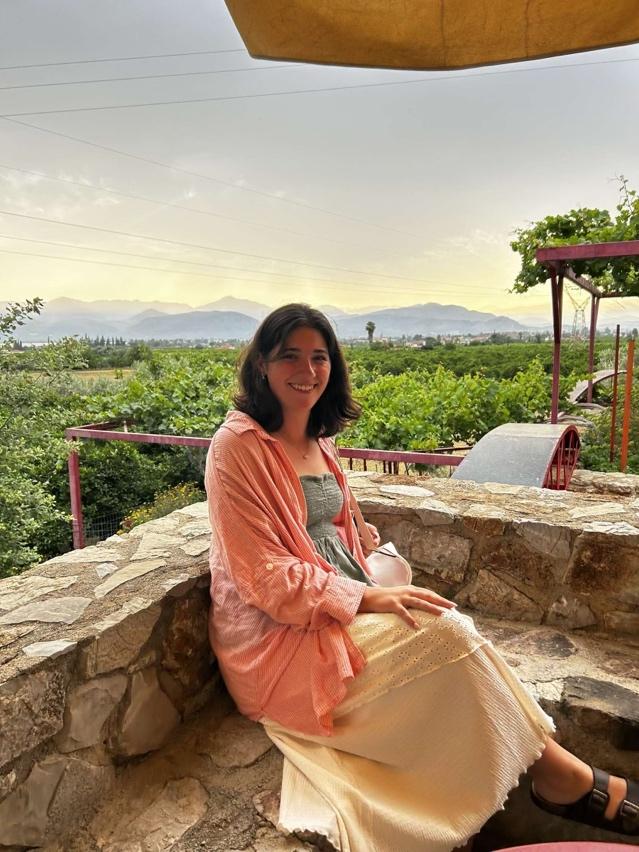
Photo Credits: Katherine Hall

Junior Katherine Hall (History major with concentrations in Archaeological Sciences and Classic Mediterranean History ‘26) conducted research this summer with mentor, Dr. Leslie Anne Warden, through Roanoke’s Summer Scholars program. Her project titled, Renegotiating the Social History of Egypt’s Non-Elite through Ceramic Analysis, examines ancient Egyptian ceramics through a social-historical lens to analyze ceramic typology and determine how different social classes existed. By investigating ceramic material in the form of drawn diagnostic sherds excavated in the summer of 2023, Katherine began to understand how the non-elite lived in Egypt. Her analysis of the sherds presents a larger date range which indicates that the site was active longer than previously believed and that the fractured political structure of Egypt at the time did not destabilize the inhabitants of this site throughout the transition from the Old Kingdom to the Middle Kingdom. Additionally, the sherds provided a glimpse of what a non-elite household consumed for cooking and food storage. Prior research on the site, Kom el-Hisn Egypt, revealed the general date of the entire site but not the date of the individual ceramics or how the sherds, pieces of broken ceramics, functioned in everyday life. During her investigation, Katherine gained numerous research skills that she will continuously use in her academic and professional career such as learning new history and terminology, and how to use research materials effectively to produce results. Katherine is currently preparing for her Honors Distinction Project, however, her research is not finished.  The site she is examining will be further excavated and analyzed, hopefully on location in Egypt in summer 2025. The material will be analyzed and cataloged in a distinction project that aims to further renegotiate the social history of the non-elite.​ Furthermore, she has already started plans for her next research project,  Recovering Egyptian Daily Life through Domestic Trash, with the intent to uncover the social history of non-elites of Egypt through discarded sherds. After graduating from Roanoke College, she plans to get her Master’s and PhD to continue her passion in recovering history that has been forgotten.

Congratulations and good luck on your Honors Distinction Project!

Summer Scholars Spotlight: Zoe Jones

Junior Zoe Jones (Communication and Creative Writing double major with a concentration in Publishing & Editing ‘25) conducted research this summer as part of the Summer Scholars program with the help of her mentor, Dr. Teresa Milbrodt, Roanoke College English and Communication Studies professor. Her project titled, Here, Queer, Black, and Functional: Mending Holes in Black Literature, focuses on the expansion of Black authors and specific topics of ethnic conflict in literature to write a novel. A majority of her research involved reading one book per week for nine weeks, then completing an annotated bibliography discussing how helpful the book was for her novel. From this process, she could reflect on the works of other Black authors and how she wished to further craft engaging works that discuss certain topics in Black contemporary literature. Zoe would go on to write her weekly chapters ranging from 5,000 to 11,000 words, and her hard work would ultimately become a novel draft of 100,958 words total. Her novel touches on complex topics including struggles in the corporate world, childbirth, and mental health for Black women, reaching out to people and doing personal research to achieve an authentic portrayal of her characters. Participating in the Summer Scholars program allowed Zoe to grow and learn as an author using her knowledge of publishing whilst combining her passion for writing and communication to simulate the journey of a full-time author. With this research, Zoe plans to revise her novel and send it out into the world of publication. 

Congratulations and we cannot wait to read your first novel! 

Summer Scholars Spotlight: Madison Snyder

Senior Madison Snyder (Psychology major & sociology minor, December ’24) conducted research over the summer through RC’s Summer Scholars program. Her project titled, Differences in Stress Between Freshmen and Seniors Focusing on Presenting, investigates the differences in stress between college freshmen and seniors while enduring public speaking. Using the Trier Social Stress Test (TSST) model, she has started collecting data from senior participants focusing on a variety of details such as stuttering, eye contact, and the accuracy of the presentation. Applying to Summer Scholars gave Madison great opportunities to further conduct research and allowed for the growth of new and existing skills. During the summer, she gained experience with the Institutional Review Board to approve her study as well as undergoing Social and Behavioral Research CITI training. Additionally, Madison learned how to compose multiple surveys, how to use electrodes, and the Mindware device responsible for collecting heart rate data. Her short-term goals for this research include accurately collecting physiological and self-reporting data; she aims to understand how heart rates differ between baseline, preparation, and presentation segments. Furthermore, she aims to determine whether seniors’ experience with presenting correlates to the amount of stress involved. Her long-term goals are to seek further research and understand stress management options, utilizing the results to consider which options are best for specific groups. Madison would like to thank her advisor, Dr. Kennedy-Metz, Roanoke College psychology professor, for providing guidance throughout the process, and Dr. Carter, Roanoke College psychology professor and Director of Experiential Learning, for hosting the Summer Scholars events, providing research information, and explaining the process.

Congratulations and we look forward to seeing your success in the future!


Summer Scholars Spotlight: Austin Parker

Senior Austin Parker (Biochemistry & Biology double major with a concentration in Medicinal Chemistry ‘24) conducted research last summer as part of the Summer Scholars program with mentor Dr. Christopher Lassiter. His project, Using CRISPR/Cas9 to model lipoid congenital adrenal hyperplasia (LCAH) in zebrafish (Danio rerio), was inspired by his interest in medicine and health and cutting-edge technology like CRISPR/Cas9. Austin believes improving the quality of life for individuals with chronic diseases is a worthwhile effort, and getting involved in this research provided resources to expand on previous knowledge of LCAH and discover new ways to detect and treat patients. 

The majority of his process was a learning experience. He said the beginning stages of the project involved learning how everything worked, technical and lab skills, as well as how to use CRISPR/Cas9. Once Austin learned to navigate the tools, cut sites were designed, and CRISPR was used. When asked what the most challenging part of his research was, he said having to troubleshoot things when they stopped working. 

Austin’s research project required him to utilize CRISPR/Cas9, a gene-editing technology requiring the Cas9 protein to do all the heavy lifting. He explains that CRISPR/Cas9 originated in bacteria and was able to be modified by scientists at UC Berkeley to target and make cuts at specific DNA sequences. For his project, he designed a strand of RNA the protein used as a reference. He used the RNA to cut the star gene to prevent the product of the gene from working properly to replicate LCAH in zebrafish. Zebrafish were chosen for this model because of their vast similarities with human genetics; over 70% of the human genome has a zebrafish gene with similar functionality. 

Currently, Austin is still hard at work on the model with zebrafish that could potentially carry the mutation. In the completion of his research project, Austin hopes to discover a deeper understanding of LCAH, including detecting early signs of the disease, new ways to treat it, and how it may impact other areas of the body. After graduating from Roanoke, he plans to attend pharmacy school and become a cornerstone in his community.

Summer Scholars Spotlight: Virginia Graves

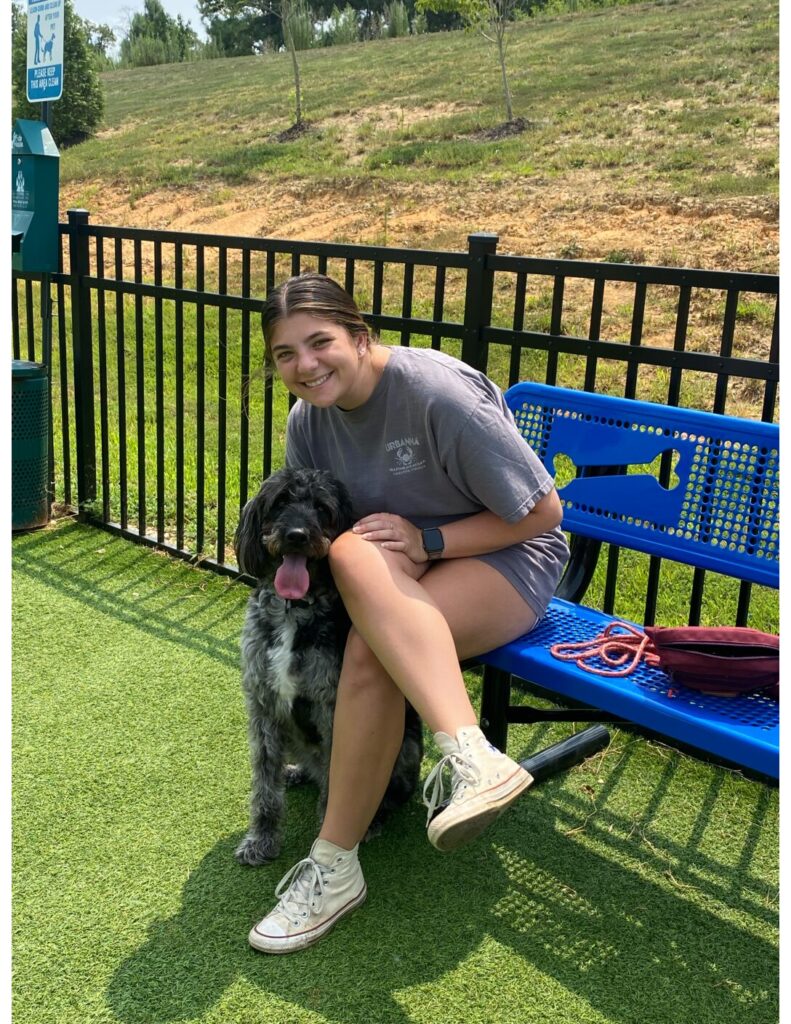
Photo Credits: Lee Ann Graves

Senior Virginia Graves (Communications major & foreign policy and history minor ‘24) conducted research last summer with mentor, Dr. Martinez-Carrillo as part of the Summer Scholars program. Virginia knew she wanted to conduct research while at Roanoke and started thinking of topics in freshman year. Her project, “The evolution of hate speech and its consequences”, came about when she started taking communications and mass communications classes and realized the power it can have in manipulating thoughts and ideas. She took a personal interest in interpersonal communication and the dynamics of hate speech. Previous research revealed a connection between hate speech and violence, but she wanted to cover a topic that had not been researched enough.

Virginia says her research process has been going extremely well and her advisor, Dr. Martinez-Carrillo, has helped her along the whole way. This was her first time doing research and she was doubting herself, but found that the support she received along the way was helpful; she was able to prove to herself that she could do it. She said the Summer Scholars program is a great way to be introduced to research as a beginner. 

Her research required her to examine hate speech in three different mediums, newspapers in Nazi Germany (1940-1945), radio in Rwanda (1994), and social media in the United States (2023). Her choice of three separate mediums is because she wanted to educate on different types of mass communication and she chose three different countries to show that hate speech is not an issue just in the United States. It has been around for a long time and it is in other cultures; they use different words but the same meaning. When asked what the most difficult part of her research was, she said reading the hate speech was extremely difficult, wondering how people could say such hurtful things about each other. 

The first half of her research involved compiling the literature review and initial primary source analysis and the second half focuses on framing the project in the current global context. This entails an analysis of the relationship between hate speech and freedom of speech and how the two interact online. By conducting a thematic analysis, she has found that hate speech has not evolved and the themes carry through all mediums in different countries and time periods. People are still using hate speech to distinguish between in-groups and out-groups like religion. Furthermore, she explained how the connection between freedom of speech and hate speech differs in different countries. As she was doing research on radio hate speech in Rwanda, she found that it was extremely impactful, but the rules changed when the Rwandan Ambassador for the UN came to the United States to use a radio transmitter and was denied use in the United States because it opposed freedom of speech. This sort of interaction brings up the idea of where we draw the line when it comes to freedom of speech. 

In the completion of this project, Virginia hopes to answer the question for herself as she has very strong feelings regarding freedom of speech. She wants to go into PR or marketing and says this project was a good writing experience and it taught her how to be resourceful and gain confidence in her work. She is hoping for a publication of her work and that future students will expand on her work.

Publication Highlight: Kasey Cooper, Bennet Franz, Alexander Kramer, Zoe Krut, Dr. Christopher Lassiter, Jonathon Morgan, and Dr. Benjamin Walker

Roanoke’s biology department had a major win over winter break with the acceptance of a publication in the Zebrafish journal. Congratulations are due to six former RC biology lab students: Kasey Cooper (’24), Bennet Franz (’22), Alexander Kramer (’17), Zoe Krut (’20), Jonathon Morgan (’16), Dr. Benjamin Walker, and RC biology professor, Dr. Christopher Lassiter, who are the main authors of this publication. The article discusses the effects of fipronil on zebrafish craniofacial and heart development.

Of the six former students, five are alumni who studied biology at Roanoke and are utilizing their degrees in multiple ways. Bennet is working on his MD at Louisiana State University, Alexander is an Aquaculture Technologist at Nationwide Children’s Hospital, Zoe is a Research Assistant in the Surgery Department at Cedars-Sinai Medical Center, Jonathon is the Director of Regulatory Project Management and Operations at Akouous, and Dr. Walker is an Internal Medicine doctor at the Lynchburg General Hospital.

The publication can be expected in April 2024. Congratulations again to Dr. Lassiter and our former RC students!!!

Summer Scholars Spotlight: Talia Cartafalsa

Photo Credits: Nora Terrill

Senior Talia Cartafalsa (Environmental studies & chemistry double major) conducted research this summer with Dr. Chelsea Peters as part of the Summer Scholars Program. Her project titled, An on campus collaborative restoration of landfill and degraded suburban ecosystems, started last spring when she was Dr. Peters’ advisee, and wanted to find a way to get involved in research with an environmental focus implementing both her environmental studies and chemistry backgrounds.

Using soil samples, drone surveys, and analyses of previously collected data, she discovered that the landscapes, a landfill site (planning to turn into a native meadow), two drainage ditches, and a wooded lot (planning to tun into a native forest), on Elizabeth campus in the environment center were lacking in plant-supporting nutrients like nitrogen and phosphorus. Since then, seasonal resampling and retesting has been done in correspondence to various restoration acts such as spreading compost, tilling the soil, spraying herbicide etc., allowing the chemical composition of the soil to become more homogeneous. Additionally, conducting drone surveys, in collaboration with Radford University and now an RC alum, allowed her to see the visual impact of change over time; it has also been useful for map making and gathering information such as site slope and watershed outlines. 

Furthermore, Talia and other RC students hosted their second literacy event this year and it went really well. The goal of the environment center is to turn it into an outdoor classroom and learning center for younger, underprivileged kids. She said it was a great opportunity to teach the surrounding community rather than conduct research and it was very rewarding. 

When asked what the most difficult part of the project was she said things change day to day, season to season especially in environmental science, and plans that are made do not always get done because of this; her original project proposal for wetland construction changed as well as her project title and vision as a result. Talia said going through that process was hard to adjust to mentally, but she is happy with her new project and likes where it is going. With her new project, the process has been a great experience and having background knowledge on the research allowed her to refine the direction she wanted to go in, and she also enjoyed the addition of the professional development events.

With this research, Talia has started writing a paper in hopes of publication. She explained that a majority of this project is unique to Roanoke College and it is hard to explain, but the strength in this is that future research could look at this small liberal arts school and use what was found in their own restoration projects. She is excited to see how the next generations of RC students expand on this project and discover the progress that has been made as an alum. Talia wants to achieve restoration of spaces on Roanoke College’s main campus as well as show that students, faculty, and the Roanoke community can work together to take an unhealthy utilized space and turn it into something useful. 

As an environmental studies and chemistry double major, Talia’s career aspirations include applying to PhD programs involving coastal work, and this research has allowed her to build a project from the ground up where she can apply these skills in other places. 

If you have any interest in environmental science or being outdoors, be on the lookout for posters in the life science building for service projects hosted by the environmental center open to the public!

Family Weekend Research Showcase

Photo Credits: Hany Hosny

On September 22nd, Roanoke College held its annual Family Weekend Research Showcase and we had a great turnout of families, friends, staff and students!

Photo Credits: Hany Hosny

Congratulations to the first-place winner, James Hartmann (’25, Biology major) who presented on groundwater seepage (Methods for Identifying and sampling preferential groundwater seepage sites).

Photo Credits: Hany Hosny (From left to right: Nora Terrill, Dr. Chelsea Peters, Talia Cartafalsa, and James Hartmann)

Talia Cartafalsa (’24, Environmental Studies & Chemistry double major) took home second place with her research about ecosystem restoration titled, An on campus, collaborative restoration of landfill and degraded suburban ecosystems. Third place was awarded to Nora Terrill (’24, Environmental Studies major) with her presentation about cattle grazing and its impact on Catawba Creek (Multimetric Approach to Investigate the Impact of Cattle Grazing on the Health of Catawba Creek, Virginia, USA). All three winners were mentored by environmental studies professor, Dr. Chelsea Peters.

Congratulations again to our three winners!!!

Publication Highlight: Maria Damewood, Savannah-Faith Clark and Dr. Ashley Artese

Two RC Alums, Maria Damewood, Health and Exercise Science Major & Spanish Minor ’22 and Savannah-Faith Clark, Health and Exercise Science Major & Neuroscience Concentration ’21, were recently published in the Journal of Aging and Physical Activity alongside former assistant professor, Dr. Ashley Artese. Clark received funding from Roanoke’s Pathways Program allowing her to take her research to the next level. Their article titled, “Physical Activity During the COVID-19 Stay -at-Home Order in Active Older Adults: A Qualitative Study” was published in August of this year and discusses how the closures of fitness centers influenced physical activity. 

Congratulations to our fellow Maroons!!!

Student Spotlight

Senior Jacob Barret conducted research this past summer and fall using the zebrafish model to characterize the effect of estrogen on regeneration in the caudal fin. His work demonstrated that embryonic zebrafish exposed to high concentrations of estrogen resulted in inhibited regenerated tail length, area, and morphology. Furthermore, differences in pigment formation were qualitatively observed between treatment groups. This spring, he has focused on elucidating possible molecular mechanisms responsible for this inhibited regeneration process. So far, he has observed the expression of two genes involved in regeneration in the presence of various estrogen concentrations following amputation. The expression of these genes in various estrogen treatments has been monitored using qPCR. The results of this molecular work will be discussed as a part of his senior thesis near the end of April! Fantastic work!