Adrian Gillem presents on Japanese Political Leadership Trends at the ISA Conference

AdrianGillem_306

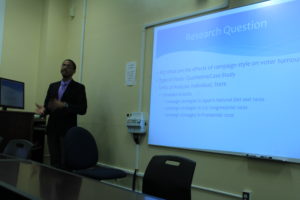
Adrian Gillem recently travelled to the International Studies Association South Annual Conference in Charlotte, NC to present his research project, “Understanding Japanese Political Leadership Trends Post-World War II: Do the Leaders’ Personal Traits Matter?” For this project Adrian

“analyzed the premierships of three of the longest serving Prime Ministers in post-World War II Japanese history; focusing on their oratorical ability, political brinkmanship, ideology, and party-backing as markers of analysis.”

Adrian has done research over the course of three semesters here at Roanoke. Adrian decided to pursue research opportunities here after taking his Research Methods class in the Public Affairs department.

“Dr. O’Keef noticed my keen interest in comparative governing structures in East Asia, post-World War II. Following the course, she suggested I refine and narrow down my subject options, in pursuit of an independent study of some kind. This led to my current focus topic on Japanese political development trends post World War II, particularly on its so-called ‘leadership crisis.’”

Adrian’s faculty advisor was Dr. Andreea Mihalache-O’Keef and he

“worked quite closely with Professor O’Keef over the course of my research project. In fact, she was one of the key figures that assisted in me in successfully applying for a Gilman Scholarship, which supported a 4-month study abroad experience.”
IMG_0016

This was Adrian’s first time presenting at a professional conference and he explains that it was an

“insurmountable experience that I will never forget. Presenting before a professor of a separate university is nerve-racking. But having that same professor critique a paper you have worked on for months is even more nerve-racking. Nevertheless, both experiences gave me confidence to pursue even more research opportunities.”

Adrian’s advice to students considering research opportunities is to

“find a professor you feel comfortable with and pursue every opportunity that professor gives you. If research is one of those opportunities, take it. It develops your presentation skills, gives you confidence, and builds your resume. If you plan on going to graduate school, undergraduate research is a good way of making yourself unique among a slew of other applications.”

For more information on the ISA Conference please visit:  https://www.isanet.org/Conferences/SouthCharlotte2013.aspx
Sarah Barb presents on the Migration of Han Chinese into Historic Tibet at the Annual Mid-South Sociological Association Conference

100_1194

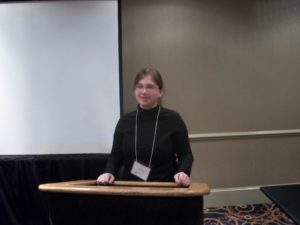
Sarah Barb recently presented her research project, “Economic Development and Political Integration in China: The Migration of Han Chinese into Historic Tibet”, at the 39th Annual Mid-South Sociological Association Conference in Atlanta, Georgia. This is Sarah’s first year doing research and this particular project is her Honor’s project.

Sarah explains that this project is

“about population changes in Tibet and the Western provinces in China. Recent economic opportunities have caused the ethnic majority in China to move to Western provinces that were once part of Tibet.”

Sarah’s advisor, Dr. Daniel Sarabia, invited her to work on this project with him. She explains:

“It was really interesting working with Dr. Sarabia, I learned a lot about what sociology researchers have to do to get their ideas out into the academic literature and about how to get funding for research. We are still working on the research but we did a lot of work together on this research.”

After submitting the paper it was accepted for a paper presentation at this conference. This was Sarah’s first time presenting outside of a classroom and she states that it was

“exciting and nerve-wracking at the same time. I got a lot of feedback about my research and it was very helpful.”

Sarah’s message to students considering research opportunities:

“Roanoke College is a great place to do undergraduate research because the professors are very willing to work with students on projects, whatever department you are in.  Doing research is a great way to get course credit for something that you are already interested in and it looks good on a resume, especially if you plan on going to graduate school. It is a way to start sharing your ideas with the world, instead of feeling that you are not using the knowledge you have gained this far here at Roanoke.”

Samantha Garst presents on Foreign Direct Investment at the ISA Conference

ResearchHeads-99

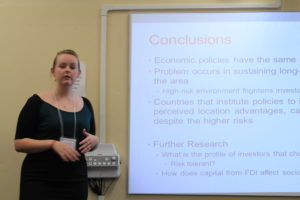
Samantha Garst recently travelled to the International Studies Association South Annual Conference in Charlotte, NC to present her research project, “Risky Business: A panel study of the effects of government policies on attraction of FDI in post-conflict countries.” For this project she

“aimed to give foreign government the policy-making tools to attract foreign capital when they needed it the most.”

Samantha started this research this past May in the Summer Scholars program. Dr. Andreea Mihalache-O’Keef was Samantha’s faculty advisor for this project and she explains that

“any time that I was experiencing trouble during the process, I felt more than comfortable going to her for help. It was interesting to have a question and be handed a book that would contain my answer. What helped me even more was that Dr. Mihalache-O’Keef would never give me out-right answers. She challenged me to critically think about my next steps—which gave me a plethora of ‘ah-ha’ moments throughout the summer.”

IMG_0024

This was Samantha’s first time presenting her research and she felt that is was nerve-racking to present at an academic conference.

“I was worried about my paper being picked apart on small grammatical errors and to be asked questions I didn’t know the answer too. I was completely wrong. Presenting my research allowed me the opportunity to share my ideas to a group of people that were actually interested in what I had to say. Even more, I was given outside feedback on how to better improve my project for the future. It was more than helpful.”

Samantha’s advice to students considering research is to take the chance and research something that you love.

“Research is an extensive process and journey that seems to never end; ladled with many ups and downs. If you aren’t interested in what you’re researching, then you won’t enjoy one second of it. My advice, find what you love and delve into it. Don’t fear that you won’t have anyone to help. I’ve never had a professor at Roanoke College turn me away. Just put yourself out there. The skills that you will develop are irreplaceable.”

For more information on the ISA Conference please visit:  https://www.isanet.org/Conferences/SouthCharlotte2013.aspx
Meet the New Faculty: Dr. Pablo Hernandez in Economics

Dr. Pablo Hernandez is an Associate Professor of Economics teaching introductory and intermediate microeconomics, international trade and finance, and a 200-level INQ course. Dr. Hernandez’s fields are in development economics; environmental and ecological economics and his specialty is in environmental economics.

Dr. Pablo Hernandez
Dr. Pablo Hernandez


1. Tell us about your research.

I am researching land reforms and recent credit constraints in the agricultural sector in Mexico.  I am also researching the premises behind common access resources regimes in southeast Mexico.

 2. What attracted you to Roanoke College?

Friends and colleagues attracted me to Roanoke College. The College’s friendly and respectful environment, and its emphasis on teaching excellence in the liberal arts tradition, played a critical role in my decision to accept the position.

 3. What do you do when you’re not at work?

During my spare time I like to spend time with family and friends. I enjoy the outdoors and traveling.

If you see Dr. Hernandez around campus, please welcome him to Roanoke College!

Meet the New Faculty: Dr. Guan Soon Khoo in Communication Studies

Dr. Guan Soon Khoo is an Assistant Professor in Communication Studies teaching Research Methods, Communication Theory, and an INQ 120 (Storytelling Cinema) in the Spring. He has a PhD in Mass Communications in the Media Psychology, Media Effects field with a specialty in Entertainment Research and Narrative film.

Dr. Guan Soon Khoo
Dr. Guan Soon Khoo


1. Tell us a little bit about your research.

My research is on media entertainment, particularly films. We often think of film as “entertainment,” the out of sight, out of mind kind. However, some of us seek out and watch movies that provide us with a different experience, ones that we’d consider meaningful; some of us go to the cinema for a good cry or to be moved by these narratives, particularly dramas. So, I am interested in looking at our cognitive and emotional responses to these meaningful experiences when we expose ourselves to somber films. One over-arching research question would be “to what extent could media entertainment make us better individuals?

2. What attracted you to Roanoke College?

The atmosphere in the department in which I was hired and the feeling of belonging with faculty members who were curious and interested in my research.

3. What do you do when you’re not at work?

I am rarely not at work or thinking about it; I blame my intense but captivating graduate work. Occasionally, I practice strumming on my ukulele, which may prove to be therapeutic, and I try to watch movies on my shamelessly large projection screen at my residence after sundown.

If you see Dr. Khoo on campus, please welcome him to Roanoke College!

Dr. Richard Keithley wins Baxter Young Investigator Award

award1

This past month Dr. Richard Keithley won the Baxter Young Investigator Award from the Baxter Healthcare Corporation. This award is given to highlight a young scientist’s accomplishments and he presented his research project, “Ultrasensitive Single-Cell Analysis of Glycosphingolipid Metabolism”, at their worldwide headquarters in Deerfield, IL. He is one of five recipients out of fifty-eight applicants.

For this project Dr. Keithley wanted to find out why the chemical makeup of cells that are spatially, genetically, and functionally identical can vary up to 35%. He constructed equipment that allowed for the detection of glycosphingolipids in single cancer cells.

“Glycosphingolipids are a promiscuous group of specialized molecules that reside on the outside of cells and are involved in a variety of functions including cancer progression.  Single cells are microscopic so we need very sensitive instrumentation to measure the small amount of glycosphingolipids inside of them.   Borrowing from the technology used to sequence the human genome, I constructed an instrument that was capable of detecting fewer than 100 glycosphingolipid molecules.  Once the instrument was constructed, I then studied the differences in glycosphingolipid metabolism among single cells within cancerous tumor mimics.”

award2

Dr. Keithley plans to bring this same innovative technology here to Roanoke College to research glycosphingolipid metabolism in neuronal tissue.

“There is some evidence that these molecules could play a role in the progression of neurodegenerative disorders such as Parkinson’s disease and Alzheimer’s disease.  I am eager to work with [students here] to investigate this further.  Moreover, this technology will provide students a distinct opportunity to work with instrumentation that isn’t available at any other liberal arts college in the country.”

Dr. Keithley advises students considering research opportunities here to

“Jump in with both feet!  Roanoke College provides students with unique opportunities to perform cutting-edge research across multiple disciplines that students at other institutions do not have.  I believe research is the art of conducting science without an instruction manual.  Life doesn’t come with one either so research can provide students an avenue to explore their creative side while making important contributions to the broader field of knowledge. “

award3

This project was recently published in Analytical Chemistry and can be viewed here: https://pubs.acs.org/doi/abs/10.1021/ac402262e

More information on the Baxter Young Investigator Award can be viewed here: https://www.baxter.com/about_baxter/scientific_excellence/young_investigator/index.html

Students interested in learning more about this work are encouraged to email or drop by Dr. Keithley’s office (Trexler 179)

Meet the New Faculty: Dr. Richard B. Keithley in Chemistry

Keithley001

Dr. Richard B. Keithley is an Assistant Professor of Chemistry teaching General Chemistry/General Chemistry Laboratory, Environmental Chemistry, and Instrumental Analysis. He has a PhD in Analytical Chemistry and his specialty is Electrochemistry, Separations, and Neuroscience.

1. Tell us a little bit about your research.

As an analytical chemist, my expertise lies in the development of instrumentation and equipment used to measure interesting molecules.  You probably have seen many of these items on shows like CSI or the Discovery Channel’s Forensic Science shows.  Personally, I am enamored by Nature’s sophisticated elegance and am eager to apply my knowledge to address neurobiological and environmental problems.

Neurons in your brain control everything from how you move, how you think, who you are, and what you love.  Neurons talk to one another with the aid of chemical messengers called neurotransmitters.  Neuronal communication is exceptionally fast and can be difficult to measure, both because sensors require rapid response times and the sensors must be small enough to not damage neuronal tissue.  Using a technique called Fast Scan Cyclic Voltammetry, I can measure neuronal communication in the brains of organisms in real time while they are awake and moving around.  Working with psychologists and biologists, I am interested in using this technology to study how neuronal communication is affected by drug abuse and how it is altered in neurodegenerative diseases including Parkinson’s Disease and Alzheimer’s Disease.

Keithly1

2. What attracted you to Roanoke College?

Roanoke College is the type of institution that personally allows me to excel as both a teacher and a scholar.  I don’t fit into the traditional mold of a chemist.  Roanoke College is unique in that I am not just allowed, but I am encouraged to work with students across multiple disciplines including chemistry, biology, and even psychology.  Moreover, when I arrived at Roanoke College it just felt like a place I wanted to call home.  Finally, I am a native Virginian and it is great to come back home from my travels across the U.S.  I was raised in a rural area along the coast and decided to experience life in the lovely Blue Ridge.

3. What do you do when you are not at work?

As a chemist, I realize that spare time has exceptionally high vapor pressure and readily evaporates.  However, on the occasion that I manage to find spare time, I enjoy sitting outside reading a book and playing with my two cats, Smith & Wesson.  I also love to show off my Southern heritage, constantly cooking food for others that is incredibly unhealthy yet exquisitely decadent.

If you see Dr. Keithley around campus, please welcome him to Roanoke College!

Can’t resist texting while working? Summer Scholar Jessica Gladfelter (’15) says blame it on your hormones

Jessica Gladfelter (’15) spent her summer studying texting behavior in college students.

In particular, Jessica’s research project focuses on technointerruptions, such as text messages or Facebook notifications.

Most students do not turn off their electronic devices when studying or completing coursework even though they are known to cause stress and distract students from what they are doing. Jessica believes there may be a biological explanation behind it.

“Over the summer, I reviewed existing literature on texting and the social hormone, oxytocin. We developed a study to examine whether oxytocin is released in relation to receiving technointerruptions, causing students to feel socially connected and overriding the stress associated with being interrupted.”

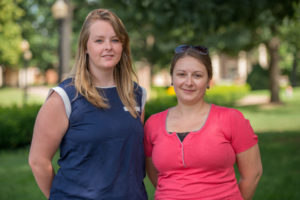
Dr. Denise Friedman and Jessica Gladfelter


Jessica enjoyed Summer Scholars because

“it allowed me to concentrate solely on my research while receiving individual attention and support from my research adviser.”

All of the Summer Scholars and summer researchers had the option to live in New Hall this summer. Jessica noted that

“I enjoyed the atmosphere of living on campus with other students that love research just as much as I do.”

Jessica’s faculty mentor was Dr. Denise Friedman, and Jessica advises other student researchers to be proactive.

“Start a literature search without being asked, come up with research ideas, ask if there is a project that you can help with, etc. Show the professor you are working with that you can handle and want responsibilities.”

Jessica is planning to continue her research this fall by collecting data that she will write up for publication.


Do you love birds? Summer Scholar Lauren Strong (’14) explains how bird diversity differs from forests to residential areas in the Roanoke Valley

Lauren Strong (’14) is a Biology major and her research project looked at

“how human development affects bird populations along the Roanoke River.”

She decided to study three varying habitat uses of riparian forests (habitats along rivers), and looked at different levels of development and how it impacts the birds that live there:

“My high impact sites are within residential areas, and my low impact sites consist of intact forest along the Blue Ridge Parkway. So far, I have found that even though there were similar numbers of species between the high and low impact sites, they both had totally different communities.”

Lauren Strong
Lauren Strong

Lauren mentions that

“being able to get experience in a field that I am interested in was really incredible. Secondly, it’s really nice to do research during the summer, when you more time on your hands to really focus on the research.”

She advises other student researchers to

“begin your data collection and scientific paper, as soon as the summer begins. Also, keep in touch with your faculty mentor multiple times a week! Most importantly have fun!”

Lauren’s faculty mentor for this project was Dr. Rachel Collins.

Lauren plans on continuing research this year on

“migratory birds that use habitats along the Roanoke River. I will be collecting data during the fall and winter. Then my last semester, I plan on conducting an Honors Project! Essentially, I will gain as much experience as possible before I graduate.”

———

Mark your calendars for our next on-campus presentation opportunities:

Showcase on Thursday, November 21, 2013 from 6-8pm in Fintel Library focused on service-learning, internships, and study abroad. Apply to present by November 8.

Showcase on Friday, November 22, 2013 from 6-8pm in Fintel Library focused on research and artistic/creative work. Apply to present by November 8.

For updated information on student-faculty research:

#GraphTheory in 140 characters or less. Summer Scholar Jon Marino (’14) studied the mathematics of twitter

Jon Marino (’14) is a mathematics major with a concentration in statistics. Jon’s research project allowed him to create a computer model of the social networking site Twitter to understand and analyze how people interact online.

“I used data collected from real Twitter users to model a small portion of the site and simulated how people in the network may interact with each other.  We want to answer the following questions: how many people saw your message and how long did it take for them to see it.  Whether you’re marketing a product or a politician trying to gain supporters, it’s advantageous to have your message seen by the greatest amount of people in the shortest amount of time, and our model helps see how that can happen in social media.”

As for the Summer Scholars program, Jon says that he enjoyed being a part of it because

“it was a productive way to spend my summer researching a topic I am passionate about while gaining valuable research experience.”

Jon Marino ('14) and Dr. Karin Saoub
Jon Marino (’14) and Dr. Karin Saoub

Jon’s faculty mentor for this research project was Dr. Karin Saoub. His advice to students interested in research is

“to find out which faculty member is passionate about the same things you are, because that gives you a valuable resource and a mentor who is just as excited as you to collaborate with.”

This year Jon will be applying to graduate programs in pure mathematics and continuing planning for the math club at RC.

———

Mark your calendars for our next on-campus presentation opportunities:

Showcase on Thursday, November 21, 2013 from 6-8pm in Fintel Library focused on service-learning, internships, and study abroad. Apply to present by November 8.

Showcase on Friday, November 22, 2013 from 6-8pm in Fintel Library focused on research and artistic/creative work. Apply to present by November 8.

For updated information on student-faculty research: